
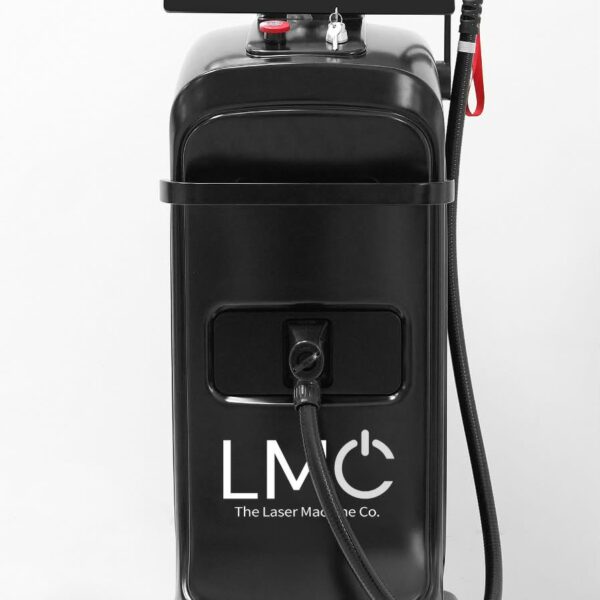
TATTOO REMOVAL MACHINE PRICE UK · COMPLETE BUYER'S GUIDE
If you're researching tattoo removal machine prices in the UK, you've probably already noticed how wide the range is. One supplier lists a machine for under £2,000. Another quotes £25,000. And somewhere in between, you're trying to work out what you actually need — and what you'd be throwing money away on.
This guide cuts through it. We'll walk you through what professional tattoo removal machines actually cost in the UK right now, what drives the price differences, which specifications genuinely matter for real-world clinical results, and what's included (or suspiciously absent) across different suppliers' packages.
We've also included honest, transparent pricing for our own LMC range — because we'd rather you make a well-informed decision than a rushed one. If a competitor's machine is genuinely better value for your situation, we'll tell you that too.
WHAT'S IN THIS GUIDE
- UK tattoo removal machine price ranges (2026)
- What actually drives the cost difference
- ND:YAG vs picosecond — which technology do you need?
- The specs that actually matter (and the ones that don't)
- The LMC range — prices, specs, and who each machine suits
- Hidden costs to budget for beyond the machine price
- Finance options for UK clinics
- Red flags when buying a tattoo removal laser
- Return on investment — what to realistically expect
- Frequently asked questions
UK Tattoo Removal Machine Price Ranges (2026)
What the market actually looks like right now
Professional tattoo removal machines in the UK currently range from approximately £1,500 to £25,000+, with the majority of clinic-grade options sitting between £4,000 and £17,000. Here's how the market breaks down by tier:
TIER 1 · ENTRY-LEVEL
£1,500 – £4,500
Compact ND:YAG machines designed for practitioners starting out or adding tattoo removal as a secondary service. Typically single or dual wavelength (1064nm/532nm), lower shot lifespans, and basic cooling systems. Good results on standard black and dark blue ink.
Best for: Mobile practitioners, salons adding tattoo removal for the first time, training academies needing a reliable clinical machine on a tighter budget.
TIER 2 · MID-RANGE
£4,500 – £8,000
The most popular bracket for established clinics. Triple wavelength capability (1064nm, 532nm, 1320nm) covers virtually all tattoo colours and adds carbon peel treatments. Higher shot lifespans, improved touchscreen interfaces, combined water and air cooling.
Best for: Clinics running tattoo removal as a core treatment, practitioners who want versatility across ink colours, skin types, and treatment modalities.
TIER 3 · PREMIUM / DUAL-PURPOSE
£8,000 – £17,000
High-output machines built for busy clinics running multiple sessions daily, or 2-in-1 systems combining tattoo removal and diode laser hair removal in a single unit. Higher wattage outputs, advanced cooling systems, longer operational lifespans, and the ability to deliver two revenue streams from one device.
Best for: High-volume clinics, practitioners looking to offer multiple laser services without buying separate machines, businesses maximising return per square foot of clinic space.
TIER 4 · MEDICAL / SPECIALIST
£17,000+
Medical-grade equipment from established manufacturers, often incorporating picosecond technology rather than nanosecond. Most commonly found in dermatology clinics, dedicated tattoo removal specialists, or multi-location operations where volume justifies the investment.
Best for: Specialist clinics where tattoo removal is the primary revenue driver at significant daily volume, practitioners treating complex multi-colour tattoos on difficult skin types as a speciality.
The honest takeaway
Most UK clinics adding professional tattoo removal achieve excellent, commercially viable results from machines in the £4,250–£11,000 range. You don't need the most expensive device on the market to deliver professional outcomes — but you do need the right one for your volume, client base, and treatment mix.
What Actually Drives the Cost Difference?
Not all laser machines are priced on specification alone
When you compare machines across suppliers, the headline price rarely tells the full story. These are the factors that genuinely justify a higher price — and a few that don't.
1. Technology type: nanosecond vs picosecond
Nanosecond (Q-Switch ND:YAG) machines are the industry standard for tattoo removal and deliver strong results across the vast majority of treatments. Picosecond lasers fire significantly shorter pulses, which can improve outcomes on certain stubborn ink colours and superficial pigmentation — but they cost considerably more, and for most general tattoo removal work, the clinical difference is marginal.
Unless you're specifically building a specialist clinic focused on difficult or complex cases, nanosecond ND:YAG technology is more than sufficient and represents far better value for money.
2. Number of wavelengths
Tattoo ink absorbs laser energy differently depending on colour. The 1064nm wavelength targets dark inks — black, dark blue, dark green. The 532nm wavelength breaks down warmer tones — red, orange, yellow. A third 1320nm head extends capability to carbon peel facials and skin rejuvenation treatments.
Machines with all three wavelengths cost more upfront, but they significantly extend the range of clients you can treat and add a completely separate revenue stream through carbon facials — which many clinics find becomes a popular standalone offering.
3. Shot lifespan
A machine rated for 5 million shots and one rated for 20 million shots are different investments over time. Shot lifespan directly affects how long before the YAG bar and key internal components need replacing — which has a real bearing on long-term running costs in a busy clinic. Higher-end machines cost more upfront but can represent better value over a 3–5 year operational period.
4. Cooling system quality
Basic machines use air cooling only. Mid-range and premium machines combine water and air cooling. In a clinic running back-to-back sessions, cooling capacity directly affects how long you can operate the machine continuously without overheating — which has a practical impact on daily treatment capacity, consistency of energy output, and long-term machine health.
5. What's included in the package
This is where supplier packages vary most dramatically. A machine listed at £3,000 with no training, no meaningful warranty, and no after-sales support is not a better deal than a £4,250 machine that includes professional training, a 1-year warranty, safety accessories, and a supplier you can actually call. Always compare total cost of ownership — not just the sticker price.
6. Brand positioning vs genuine engineering
It's worth being direct: some premium pricing in this market reflects brand positioning rather than proportional engineering improvements. A £15,000 machine is not always three times better than a £5,000 machine in day-to-day clinical use. At The Laser Machine Co, we price based on specification, lifespan, and what is genuinely included with purchase — not on what we think the market will bear.
ND:YAG vs Picosecond — Which Technology Do You Actually Need?
The question that generates more confusion than it should
When you start researching tattoo removal equipment, you'll quickly encounter two camps: suppliers promoting Q-Switch ND:YAG (nanosecond) machines, and those pushing picosecond lasers as the premium option. Here's a straightforward breakdown of what the difference actually means for a UK clinic.
ND:YAG (NANOSECOND)
- Pulse width: 5–10 nanoseconds
- Industry standard for tattoo removal
- Excellent on black, dark blue, red, orange ink
- Triple wavelength options available
- Price range: £4,000–£17,000
- Widely insurable by UK providers
- Proven long-term reliability data
PICOSECOND
- Pulse width: 0.1–1 nanosecond
- Superior on stubborn greens and blues
- Faster ink fragmentation in theory
- Reduced thermal damage potential
- Price range: £15,000–£50,000+
- Fewer clinics can verify long-term ROI
- Significant cost premium
The honest clinical reality
Picosecond lasers are genuinely superior for certain specific cases — particularly tattoos with stubborn green or sky-blue ink that resists nanosecond treatment. The shorter pulse duration fragments ink particles more efficiently and may require fewer sessions in those specific scenarios.
However, for the vast majority of tattoos a UK clinic will treat day-to-day — predominantly black, grey, and mixed-colour amateur or professional tattoos — a well-specced ND:YAG machine delivers excellent results. The difference in session count for standard cases is minimal. The difference in machine cost is enormous.
Our recommendation: Unless you're specifically positioning as a specialist clinic for complex or previously-treated resistant tattoos, start with a high-quality ND:YAG machine. You'll achieve professional results, have a significantly lower initial outlay, and can always upgrade later if your client mix demands it.
The Specs That Actually Matter (And the Ones That Don't)
A practical guide to reading a tattoo removal machine spec sheet
Machine spec sheets can be overwhelming — and some suppliers pad them with numbers that sound impressive but have limited bearing on real-world results. Here's what you should actually be looking at.
✓ Specs that genuinely matter
✗ Specs suppliers inflate but that matter less
The LMC Tattoo Removal Range — Prices, Specs, and Who Each Machine Suits
Transparent pricing with no hidden costs
All LMC tattoo removal machines include free professional training, a 1-year warranty, safety accessories (laser glasses and client goggles), and ongoing UK-based technical support. Here's the full range:
ENTRY-LEVEL · TATTOO REMOVAL
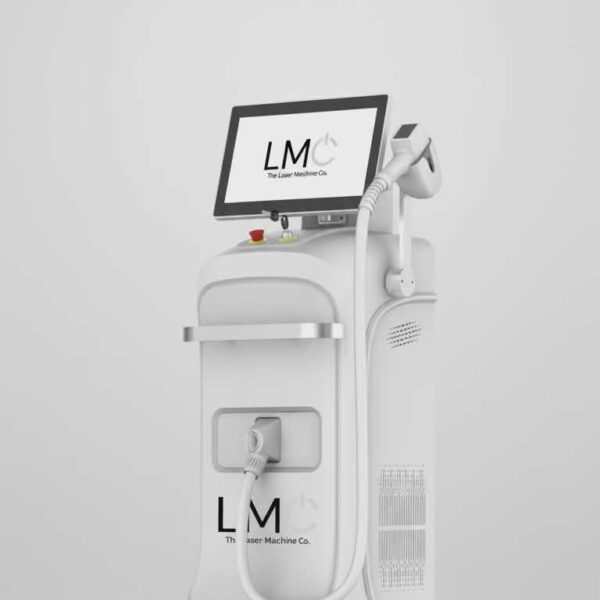
LMC ND:YAG Pro 4
£4,250
Includes training & warranty
The most accessible machine in our range. Compact and portable at 20kg, the Pro 4 delivers triple wavelength ND:YAG performance — covering black, coloured, and mixed inks — in a footprint suitable for any clinic or mobile setup. Built for practitioners who want professional results without committing to a premium price point.
Ideal for: Practitioners starting out in tattoo removal, mobile therapists, salons adding tattoo removal as a secondary service, training academies needing a reliable clinical machine.
View LMC ND:YAG Pro 4 →MID-RANGE · TATTOO REMOVAL
LMC ND:YAG PRO X Android
£5,999
Includes training & warranty
The upgraded option for practitioners who want a more advanced interface and higher-end build quality without stepping into the premium bracket. The PRO X features an Android-based operating system, giving you a significantly more intuitive user experience and the ability to run clinic management applications alongside your treatment protocols.
Ideal for: Established clinics wanting a step up in user experience and build quality, practitioners who value an intuitive modern interface for busy clinic days.
View LMC ND:YAG PRO X →PREMIUM · 2-IN-1 TATTOO & HAIR REMOVAL
LMC Dual Lux Pro
£10,999
Includes training & warranty
The most versatile machine in the LMC range. The Dual Lux Pro combines a 4000W ND:YAG tattoo removal system with a 1600W diode laser for professional hair removal — two complete treatment capabilities in a single unit. For clinics looking to maximise revenue per square foot, this is the machine that makes the most commercial sense.
Ideal for: Clinics wanting to offer both tattoo removal and laser hair removal without the cost of two separate machines, established practitioners adding a second laser revenue stream, businesses looking to maximise treatment menu breadth.
View LMC Dual Lux Pro →HIGH-VOLUME · SPECIALIST
LMC Vertical Dual Lux Elite
£16,999
Includes training & warranty
The flagship LMC machine for high-volume clinics and specialist operators. Vertical tower design, advanced dual-system capability, and built to sustain heavy daily use. If your clinic's primary revenue comes from laser treatments and you're running a significant number of sessions per day, this is the machine built for that workload.
Ideal for: High-volume dedicated laser clinics, multi-practitioner setups, established businesses scaling up their laser treatment offering.
View LMC Vertical Dual Lux Elite →Not sure which machine is right for your clinic?
Book a free demo call with Alex or Dawn — we'll talk through your treatment plans, volume, and budget honestly, and show you the machines in action. If you're based in Lancashire or nearby, you're welcome to visit us in person at our Rossendale clinic.
Video/Zoom calls available UK-wide · In-person visits welcome at our Rossendale clinic
Finance Options for UK Clinics
Spreading the cost without compromising on equipment quality
Laser equipment represents a significant upfront investment, and for many practitioners — particularly those launching a new service or clinic — spreading the cost makes more commercial sense than paying in full. Here's how the main finance routes compare.
SUPPLIER FINANCE
Finance through The Laser Machine Co
We offer flexible finance options on all LMC machines, allowing you to spread the cost over agreed monthly payments. This keeps your upfront outlay low while giving you access to professional-grade equipment from day one.
Contact us to discuss available terms for your chosen machine.
BUSINESS LOAN / ASSET FINANCE
External finance through your bank or broker
Asset finance and business loans from UK lenders are commonly used for aesthetic equipment purchases. Rates vary depending on your trading history and credit profile. Speak to your bank or a business finance broker for options.
We can provide full equipment documentation to support any finance application.
A note on the ROI case for finance
A professional tattoo removal session in the UK typically costs a client £80–£200 per session, with most clients requiring 6–12 sessions per tattoo. A single client completing a full course represents £480–£2,400 in revenue from one tattoo.
On a machine priced at £4,250 and spread over 24 monthly payments, the monthly cost is approximately £177. A clinic running just 2–3 tattoo removal sessions per week covers that cost comfortably from treatment revenue alone — well before the machine is paid off. Finance removes the barrier to entry without materially affecting the profitability of the service.
Want to talk finance options before committing?
Book a demo call and we'll walk through the numbers with you — no obligation.
Red Flags When Buying a Tattoo Removal Laser
What to watch out for before you transfer any money
The professional laser equipment market has a number of suppliers who are not equipped to support clinics properly after the sale — and a smaller number who are actively misleading. These are the warning signs to take seriously.
Bank transfer only, no protected payment method
Legitimate equipment suppliers accept card payments or PayPal, which offer buyer protection. A supplier who insists on bank transfer only leaves you with no recourse if the machine doesn't arrive or doesn't match the description. This is a serious warning sign.
No physical UK address or contact number
If a supplier's website has no verifiable UK address and no direct phone number, consider whether you'd be comfortable contacting them with a technical issue 6 months after purchase. UK-based suppliers are also more accountable under consumer law.
CE certification that doesn't cover the device itself
CE marking should apply to the laser machine. Some suppliers show CE certificates for accessories in the box — the goggles, the power cable — while the machine itself is uncertified. Ask specifically for the CE certificate for the laser unit and verify it.
Training that consists of a PDF and a YouTube link
Proper tattoo removal training includes skin classification, contraindications, patch testing protocols, treatment parameters by skin type, and aftercare. If a supplier's "training" is a digital document, it's unlikely to satisfy your insurer's requirements — and more importantly, it's unlikely to prepare you properly to treat clients safely.
Impossibly low prices with inflated specifications
If a machine is priced significantly below the market rate for its claimed specs, the specs are likely inaccurate or the machine is from a manufacturer with no quality control or spare parts availability. Industry forums are full of practitioners who bought cheap and spent more on repairs than they saved on purchase price.
No after-sales support pathway
Ask the supplier directly: if you have a technical issue 8 months after purchase, who do you contact, and what is the typical response time? If they can't answer this clearly, you have no meaningful support structure. In a clinic context, a machine being down for two weeks waiting for a response is lost revenue and lost clients.
Return on Investment — What to Realistically Expect
Honest projections based on real UK clinic pricing
Tattoo removal is one of the stronger ROI services in the aesthetics sector, primarily because of the session-based model — clients return multiple times per tattoo, and many treat multiple tattoos. Here's a conservative illustration of what the numbers look like.
ILLUSTRATIVE ROI — LMC ND:YAG PRO 4 (£4,250)
Average session fee (UK)
£100–£150
Sessions to cover machine cost
~30–43 sessions
At 2 sessions/day, 3 days/week
£2,400–£3,600/month
Machine cost recovered within
~6–8 weeks
These figures are illustrative only and based on conservative UK market rates. Actual results depend on your location, pricing, client volume, and overheads. Revenue from carbon facial treatments (enabled by the 1320nm head) is not included in this calculation.
The compounding effect of repeat sessions
What makes tattoo removal particularly strong commercially is the session model. A client with a single medium-sized tattoo will typically book 6–10 sessions. That's one acquisition cost generating a sustained revenue relationship over 12–18 months. Many clients also begin treating additional tattoos once they see results — or refer friends with tattoos they want removed.
Adding hair removal with the Dual Lux Pro
The LMC Dual Lux Pro at £10,999 delivers two separate revenue streams. Laser hair removal is one of the highest-demand aesthetic treatments in the UK, with clients typically completing 6–8 sessions per treatment area. For a clinic that offers both services, the combined revenue potential significantly accelerates the return on the higher initial investment — and the machine cost difference between the Pro 4 (£4,250) and the Dual Lux Pro (£10,999) is £6,749, which a single busy month of hair removal bookings can cover.
Frequently Asked Questions
Straight answers to the questions we get asked most
See the Machines in Action Before You Buy
No obligation — just an honest conversation about what's right for your clinic
Buying a professional laser machine is a significant decision and you shouldn't have to make it based on a spec sheet alone. We offer free demo calls with Alex or Dawn — a proper walkthrough of the machines, your treatment plans, your volume, and your budget. If you're based in Lancashire or close enough to travel, you're also welcome to visit us in person at our Rossendale clinic and see the equipment working firsthand.
Most enquiries get a response the same day. No sales pressure, no obligation.
OPTION 1
Book a Demo Call
Video or Zoom call with Alex or Dawn. We'll show you the machines, answer your questions, and talk through what makes sense for your setup. Available UK-wide.
Book Demo Call →OPTION 2
Visit Us in Rossendale
Based in Lancashire or within easy travel? Come and see the machines working in person at our Rossendale clinic. Meet the team and leave with a clear picture of what you're investing in.
Arrange a Visit →OPTION 3
Request a Quote
Know what you want? Send us an enquiry with your machine of interest and any questions about finance or what's included. We'll come back to you with everything you need.
WhatsApp Us →THE LASER MACHINE CO · CONTACT DETAILS