
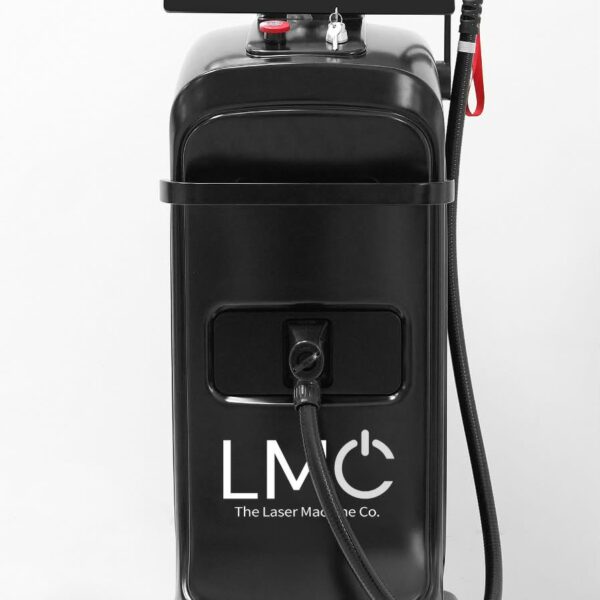
PROFESSIONAL LASER TATTOO REMOVAL MACHINES UK · BUYER'S GUIDE
Buying a professional tattoo removal laser is a significant decision. The market is crowded, the spec sheets are confusing, and the price range — from under £2,000 to over £25,000 — makes it hard to know where to start. What separates a machine that delivers consistent clinical results from one that looks impressive on paper but underperforms in practice isn't always obvious from a product listing.
This guide is for practitioners and clinic owners who want to buy right first time. We'll walk you through how to evaluate a professional tattoo removal laser — the technology types, the specifications that genuinely matter, the questions to ask a supplier, and the mistakes that cost practitioners money. We've also included the full LMC tattoo removal range with honest assessments of who each machine suits.
If you're primarily interested in pricing, our separate tattoo removal machine price guide covers cost tiers and ROI in detail. This guide focuses on how to choose.
WHAT'S IN THIS GUIDE
- How laser tattoo removal actually works
- Technology types — ND:YAG, pico, and what you actually need
- The specifications that matter for clinical results
- Questions to ask before buying
- The LMC tattoo removal range — honest assessments
- Treating different ink colours — what you need to know
- UK regulatory and insurance requirements
- Common buying mistakes and how to avoid them
- Frequently asked questions
How Laser Tattoo Removal Actually Works
Understanding the mechanism helps you evaluate machines more accurately
Laser tattoo removal works on the principle of selective photothermolysis — the laser emits very short, high-energy pulses of light at specific wavelengths that are absorbed by the pigment in tattoo ink. The rapid absorption of energy causes the ink particles to shatter into smaller fragments, which the body's immune system then gradually clears away over the following weeks.
The key word is selective — a well-specced machine delivers energy precisely enough to target the ink without causing significant damage to the surrounding tissue. This is why pulse width, wavelength, and energy density all matter so much when evaluating a machine. A laser that delivers energy too slowly, at the wrong wavelength, or at inconsistent energy levels won't fragment ink effectively and will increase the risk of adverse reactions.
The treatment process in practice
6–12
Typical sessions for a professional tattoo
6–8
Weeks between sessions for skin recovery
1–3
Sessions typically needed for PMU and SMP removal
Understanding this process matters when choosing a machine because it directly informs which specifications to prioritise. A machine that can deliver a short, sharp pulse at the right wavelength will clear ink faster and more safely than one with a longer pulse width at higher energy — even if the second machine looks more powerful on paper.
Technology Types — ND:YAG, Pico, and What You Actually Need
The honest breakdown of available technologies in 2026
There are two main laser technologies used for professional tattoo removal in the UK. Here's what each one does and who should be using it.
Q-Switch ND:YAG (Nanosecond)
Q-Switch ND:YAG lasers are the industry standard for professional tattoo removal. They fire pulses in the nanosecond range (typically 5–10ns), which is fast enough to shatter most tattoo ink effectively while minimising heat damage to surrounding tissue. A good Q-Switch ND:YAG machine with triple wavelength capability (1064nm, 532nm, and 1320nm) can treat the vast majority of tattoo colours on most skin types.
Who this suits
Most UK clinics adding tattoo removal as a core or secondary service. Excellent results on black, dark blue, red, orange, and yellow inks. Effective on standard skin types I–V. The right choice for the majority of practitioners at the majority of price points.
Picosecond Laser
Picosecond lasers fire even shorter pulses — in the picosecond range (0.1–1ns) — which fragments ink particles more thoroughly and may require fewer sessions for resistant colours like green and sky blue. They also generate more photomechanical (rather than photothermal) energy, which theoretically reduces heat damage and may lower the risk of adverse reactions on sensitive skin types.
The trade-off is cost. Professional picosecond machines start at £15,000 and range to £50,000+. For most general tattoo removal work — predominantly black, grey, and mixed-colour tattoos — the clinical difference over a well-specced Q-Switch ND:YAG is modest. More sessions may be needed for difficult colours with ND:YAG, but the revenue difference rarely justifies a £10,000+ machine premium for most UK clinics.
Who this suits
Specialist tattoo removal clinics treating a high volume of complex cases — multicolour tattoos with resistant greens and blues, previously-treated resistant tattoos, practitioners specifically positioning as a premium specialist service. Not necessary for general clinic use.
The bottom line on technology
Start with a high-quality Q-Switch ND:YAG with triple wavelength capability. You'll achieve excellent results on the vast majority of clients, at a fraction of the cost of picosecond technology. If your client mix later demands picosecond capability, you'll have the revenue base to upgrade with confidence.
The Specifications That Matter for Clinical Results
What to look for — and what to ignore — on a spec sheet
Machine spec sheets are designed to sell, not to inform. Here's a practical breakdown of what actually affects clinical outcomes.
✓ Specifications that genuinely matter
✗ Specifications that are routinely overstated
Questions to Ask a Supplier Before Buying
How you evaluate the supplier matters as much as the machine
The machine is only part of what you're buying. The supplier's knowledge, support infrastructure, and honesty matter enormously once the sale is complete. These questions separate credible suppliers from those who won't be reachable when you need them.
Can you show me the CE certificate for the laser unit itself?
Not for the accessories or the power supply — for the laser machine. A legitimate supplier will have this immediately available. Hesitation or redirection is a red flag.
What is the actual pulse width of this machine in nanoseconds?
If a supplier can't give you a specific number, or gives you a range that suggests they don't know, that tells you something about how well they understand the product they're selling.
What training is included, and will it satisfy my insurer's requirements?
Most UK insurers require a recognised Level 4+ qualification for tattoo removal. Ask specifically whether the included training meets this requirement — a PDF guide or online video typically does not.
If I have a technical issue 8 months after purchase, who do I contact and what's the typical response time?
This question reveals the after-sales reality very quickly. A vague answer ("our support team will help") is very different from a specific one ("you contact us directly on WhatsApp or phone and we aim to respond same day").
Can I see a demonstration of this machine treating a tattoo before purchasing?
Any reputable supplier should be able to offer a demo — in person if you're nearby, or on a video call showing the machine in real use. A supplier who can't or won't demonstrate the machine is a concern.
What are the lead times, and is the machine in stock or manufactured to order?
Knowing whether you're waiting 2 weeks or 6 weeks matters for planning your clinic launch or expansion. Get this in writing rather than relying on verbal assurances.
The LMC Tattoo Removal Range — Honest Assessments
What each machine does well and who it suits
All LMC tattoo removal machines include free professional training, a 1-year warranty, CE certification, and ongoing UK technical support. Here's an honest assessment of each option.
ENTRY-LEVEL · TATTOO REMOVAL
LMC ND:YAG Pro 4
£3,999
Includes training & warranty
The most accessible machine in the LMC range and one of the strongest entry-level options on the UK market. At 20kg it's compact and portable without sacrificing performance — triple wavelength capability (1064nm, 532nm, 1320nm) covers the full clinical range including carbon facials, and the 6ns pulse width delivers genuinely professional results.
Ideal for: Practitioners starting out in tattoo removal, salons adding removal as a secondary service, mobile therapists, training academies needing a reliable clinical machine.
View LMC ND:YAG Pro 4 →MID-RANGE · TATTOO REMOVAL
LMC ND:YAG Pro X Android
£5,999
Includes training & warranty
The step-up option for practitioners who want a more advanced operating system and higher-end build quality. The Android interface gives you a significantly more intuitive user experience — useful in a busy clinic where you're adjusting settings frequently between clients of different skin types and tattoo characteristics.
Ideal for: Established clinics wanting a step up in user experience, practitioners who value an intuitive modern interface for busy clinic days, those treating a wide variety of tattoo types and skin tones regularly.
View LMC ND:YAG Pro X →2-IN-1 · TATTOO REMOVAL + HAIR REMOVAL
LMC Dual Lux Pro
£10,999
1600w diode · Training & warranty included
The most commercially versatile machine in the LMC range. The Dual Lux Pro combines a 4,000W ND:YAG tattoo removal system with a diode laser hair removal system in a single unit. For clinics that want to offer both treatments, the Dual Lux Pro eliminates the need to buy two separate machines.
Ideal for: Clinics wanting tattoo removal and hair removal in one machine, practitioners adding a second laser revenue stream without the cost of two separate devices, established businesses expanding their treatment menu.
View LMC Dual Lux Pro →HIGH-VOLUME · SPECIALIST
LMC Vertical Dual Lux Elite
£16,999
Includes training & warranty
The flagship LMC machine for high-volume clinics and dedicated laser specialists. Vertical tower design, advanced dual-system capability, and built to sustain heavy daily use. If your clinic's primary revenue comes from laser treatments and you're running a significant number of sessions per day, this is engineered for that workload.
Ideal for: High-volume dedicated laser clinics, multi-practitioner setups, established businesses scaling up their laser treatment offering.
View LMC Vertical Dual Lux Elite →Want to see a machine in action before deciding?
Book a free demo call with Alex or Dawn — we'll walk through the machines, your treatment plans, and your budget honestly. If you're in Lancashire or nearby, you're welcome to visit us in person in Rossendale.
Video/Zoom calls available UK-wide · In-person visits welcome at our Rossendale clinic
Treating Different Ink Colours — What You Need to Know
Why wavelength selection matters for clinical results
One of the most common questions from practitioners new to tattoo removal is why some colours respond better than others. The answer lies in how different ink pigments absorb laser energy — and why having the right wavelengths available matters for the range of clients you can treat.
Practical implication for machine choice
For a general tattoo removal clinic, a triple wavelength ND:YAG (1064nm + 532nm + 1320nm) covers the vast majority of what you'll encounter. The only colours you'll struggle with are resistant greens and sky blues — which represent a small fraction of most clinics' work. Being honest with clients about this during consultation is part of good practice.
UK Regulatory and Insurance Requirements
What you need in place before treating clients
The regulatory landscape for laser tattoo removal in the UK varies by region and is evolving. Here's the current picture — but always verify current requirements with your local authority before launching.
ENGLAND
No national licensing scheme currently in place for cosmetic laser treatments, though this is subject to change. Some London boroughs require a Special Treatment Licence. Check with your local council.
WALES
All laser clinics must register with Healthcare Inspectorate Wales before offering treatments. Non-compliance carries significant penalties.
SCOTLAND
Local authority licensing applies. Requirements vary — check with your council before launching.
INSURANCE
Regardless of region, insurers require a recognised Level 4+ qualification and CE-certified equipment as conditions of coverage. Without both, you cannot get insured.
The non-negotiables
Regardless of where you're based: you need a recognised Level 4+ qualification, CE-certified equipment, and professional indemnity insurance in place before treating any paying clients. All LMC tattoo removal machines include free professional training and CE certification documentation.
Frequently Asked Questions
Straight answers to the questions we hear most
THE LASER MACHINE CO · ROSSENDALE, LANCASHIRE
Talk to Us Before You Commit to Anything
Book a free demo call with Alex or Dawn, visit us in Rossendale, or send a WhatsApp. We'll give you an honest assessment of which machine makes sense for your setup — no sales pressure.
OPTION 1
Book a Demo Call
Video or Zoom with Alex or Dawn. See the machines in action, get honest answers. UK-wide.
Book Demo Call →OPTION 2
Visit Us in Rossendale
Based in Lancashire or nearby? Come see the machines working in person.
Arrange a Visit →OPTION 3
Request a Quote
Know what you want? Send a WhatsApp and we'll come back to you fast.
WhatsApp Us →