
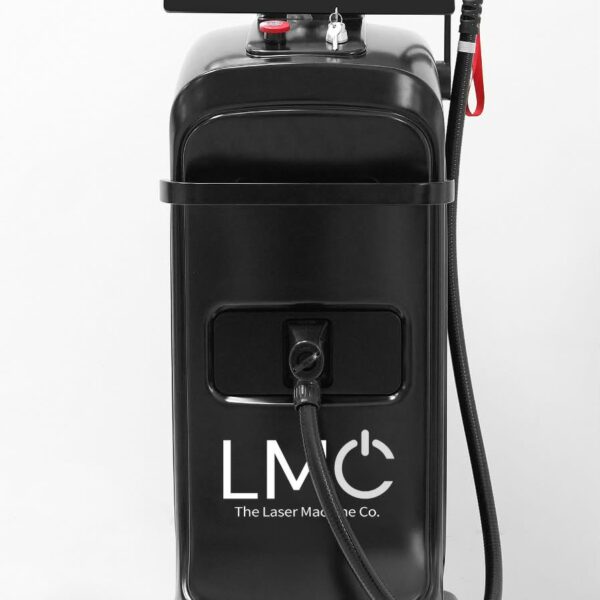
ND:YAG Laser for Tattoo Removal: What Clinic Owners Actually Need to Know
Technology, specs, UK pricing, and how to choose the right machine for your clinic
If you're looking at adding tattoo removal to your clinic, you've almost certainly come across the term ND:YAG. It appears on almost every machine listing, in every training course description, and across every piece of manufacturer marketing in the industry. But what does it actually mean, how does it affect treatment outcomes, and more importantly — how do you know which ND:YAG system is worth investing in?
This guide cuts through the specification sheets and gives you a practical framework for understanding ND:YAG laser technology from a clinic owner's perspective. We'll cover how the technology works, what the specs mean in practice, UK pricing from entry-level to professional grade, what to look for and what to avoid, and how the LMC range compares across different clinic setups.
By the end, you'll have enough working knowledge to evaluate machines properly — not just take a supplier's word for it.
IN THIS GUIDE
- What is ND:YAG and how does it work?
- The two wavelengths: 1064nm and 532nm explained
- Key specs to understand before buying
- Q-switched vs pico: what the difference means for your clinic
- UK ND:YAG machine pricing: what to expect at each level
- The LMC ND:YAG range
- Hidden costs and ongoing expenses
- Red flags when evaluating ND:YAG machines
- ROI and business case for tattoo removal
- Frequently asked questions
Key Specs to Understand Before Buying
What the numbers on the datasheet actually mean in practice
Machine specifications are frequently presented without context — suppliers list impressive-sounding numbers without explaining what they mean for treatment outcomes or clinic workflow. Here are the specs that actually matter, and what to look for.
Energy / Fluence (mJ and J/cm²)
Energy output is measured in millijoules (mJ) per pulse. Fluence (energy density) is measured in joules per square centimetre (J/cm²) — this is the figure that actually matters clinically, as it determines how much energy is delivered per unit of tissue. Fluence is affected by both energy output and spot size: the same energy through a smaller spot produces higher fluence.
For effective tattoo removal, you generally need to operate at fluences between 4–10 J/cm² for 1064nm (varying by skin type and tattoo characteristics). Professional Q-switched systems should be capable of reaching these fluences consistently. Entry-level machines with inadequate energy output can run sessions, but results will be slower and less complete.
Pulse Duration (nanoseconds / picoseconds)
Pulse duration determines how quickly the energy is delivered to the target. Q-switched ND:YAG systems operate in the nanosecond range (typically 5–10ns). Picosecond systems operate in the picosecond range (typically 300–750ps). Shorter pulse duration means more mechanical disruption of ink particles and less thermal spread to surrounding tissue — this is why pico systems tend to require fewer sessions for some ink types, particularly stubborn pigments. For a clinic starting out, Q-switched is the established, proven option and delivers excellent results across standard tattoo removal cases.
Repetition Rate (Hz)
Repetition rate is how many pulses per second the machine can fire, measured in hertz. Higher repetition rate means you can treat larger areas in less time. Entry-level machines typically operate at 1–2 Hz, which is workable but slow. Professional systems run at 5–10 Hz, meaningfully reducing treatment time on larger pieces. If you're treating full back pieces or sleeves, a 1 Hz machine will test both your patience and your client's.
Spot Size Range
Spot size refers to the diameter of the laser beam at the skin surface. Variable spot sizes allow you to adapt treatment to different tattoo sizes — smaller spots for fine detail and edges, larger spots for efficient coverage of solid fill areas. A machine with a fixed or limited spot size range restricts your technique and efficiency.
Shot Lifespan (Flash Lamp)
The flash lamp that pumps the ND:YAG crystal has a finite lifespan, typically quoted in millions of shots. Budget machines often use lamps rated at 1–5 million shots. Professional systems use lamps rated at 10–50 million shots. This matters for total cost of ownership: a machine with a 1 million shot lamp that costs £300 to replace, used at 100 shots per session across 10 sessions per week, will need its lamp replacing every two years. Factor this in when comparing upfront prices.
SPEC SUMMARY: WHAT PROFESSIONAL LOOKS LIKE
- Energy: 1,000mJ+ at 1064nm (adequate for full fluence range)
- Pulse duration: 5–10ns (Q-switched) or sub-1ns (pico)
- Repetition rate: 5Hz minimum for practical clinic use
- Spot size: Variable, minimum range 2–8mm
- Flash lamp: 10 million shots minimum
- Both wavelengths: 1064nm and 532nm as standard
The Two Wavelengths: 1064nm and 532nm Explained
Why you need both, and what each one does
The most important practical concept to understand about ND:YAG is that different wavelengths target different ink colours. No single wavelength removes all tattoo colours effectively — which is why a dual-wavelength machine is not a "nice to have" but a clinical requirement for a credible tattoo removal service.
1064nm — The Primary Wavelength
The 1064nm infrared wavelength is absorbed effectively by dark pigments — black and dark blue being the most responsive, with dark green responding reasonably well. It penetrates deeper into tissue, making it effective for ink deposited at varying dermal depths. It is also safer for darker skin tones because melanin in the epidermis absorbs less 1064nm energy than it does shorter wavelengths — reducing the risk of post-inflammatory hyperpigmentation in Fitzpatrick types IV–VI.
For most UK clinics, black ink tattoos represent the majority of removal caseload. This means 1064nm will be the wavelength used in most of your sessions. Consistent output at 1064nm — stable fluence, reliable pulse duration, and adequate energy — is the single most important performance factor in a tattoo removal machine.
532nm — The Frequency-Doubled Wavelength
The 532nm wavelength (KTP or frequency-doubled ND:YAG) targets warm-toned inks — red, orange, yellow, and some shades of purple. These colours are almost completely unresponsive to 1064nm, so without 532nm capability you cannot treat them at all. Red ink in particular is extremely common, and a machine that cannot address it significantly limits your scope of practice.
The 532nm wavelength is produced by passing the 1064nm beam through a KTP (potassium titanyl phosphate) crystal, which halves the wavelength. Because it is a secondary process, 532nm output is typically lower energy than 1064nm from the same machine. It also carries higher risk of epidermal damage on darker skin tones and should be used with appropriate Fitzpatrick screening protocols.
Some colours — certain greens, light blue, and turquoise — are notoriously difficult to remove with standard ND:YAG alone. Alexandrite (755nm) is more effective on these. If your client base is likely to include complex multi-colour tattoos with teal and light blue, it is worth factoring this into your machine choice or being transparent with clients about limitations. For most general-purpose tattoo removal clinics, ND:YAG covers the vast majority of cases effectively.
Q-Switched vs Picosecond: What the Difference Means for Your Clinic
An honest comparison — not a sales pitch for the more expensive option
The terms "Q-switched" and "picosecond" (or "pico") appear constantly in tattoo removal marketing, often with strong implications that one is categorically superior. The reality is more nuanced, and understanding the actual difference will save you from either overspending or underselling your service.
Q-Switched ND:YAG
Q-switching is a technique that stores energy within the laser cavity and releases it in a single, very short pulse — typically 5–10 nanoseconds. This produces high peak power from a relatively modest energy input, which is what makes it effective at shattering ink particles. Q-switched ND:YAG has been the gold standard for tattoo removal for over two decades. The clinical evidence base is substantial, the training is well-established, and insurance providers recognise it as standard practice.
For a clinic offering general-purpose tattoo removal — black and colour ink, standard tattoos from tattoo studios — a quality Q-switched ND:YAG system delivers fully professional results. The vast majority of tattoo removal courses in the UK train on Q-switched systems. If you've completed or are planning Level 4/5 training, it almost certainly covers Q-switched protocol.
Picosecond Lasers
Picosecond systems deliver pulses in the picosecond range — typically 300–750ps, which is roughly 10–100 times shorter than Q-switched nanosecond pulses. The shorter pulse duration produces more photomechanical (shockwave) disruption of ink particles relative to thermal effect. The clinical advantages in peer-reviewed literature include: fewer sessions required for some stubborn pigments (particularly blue-black ink that has been previously treated), better results on difficult colours including certain greens and blues, and lower incidence of post-inflammatory hyperpigmentation on some skin types.
The trade-offs are straightforward: picosecond machines cost significantly more — typically £15,000–£50,000+ for legitimate clinical systems. The marginal benefit over Q-switched for standard tattoos is measurable but not dramatic for most cases. Where pico genuinely outperforms is on resistant tattoos, previously-treated ink, and complex multi-colour work. If your positioning is as a specialist removal clinic targeting difficult cases, pico is worth the investment. If you're building a general tattoo removal service, Q-switched at the right spec will serve the majority of your caseload well.
One important note on "pico" claims in the lower price bracket: machines listed at £2,000–£5,000 claiming picosecond capability should be treated with significant scepticism. Genuine picosecond technology at the clinical level requires precise engineering that isn't achievable at those price points. If you see a cheap machine marketed as "pico," check the actual pulse duration specification in nanoseconds — it is almost certainly a Q-switched system being mislabelled.
UK ND:YAG Machine Pricing: What to Expect at Each Level
Realistic price ranges and what they actually get you
The UK market for ND:YAG tattoo removal machines spans a wide price range — from under £1,000 for entry-level systems imported from China through platforms like Alibaba, up to £50,000+ for clinical-grade picosecond systems from established manufacturers. Understanding what sits at each level helps you benchmark properly and avoid both overpaying and underbying.
Under £2,000 — Entry Level / Training Use
Machines in this bracket are typically Q-switched systems with limited energy output (often under 500mJ at 1064nm), low repetition rates (1–2Hz), fixed spot sizes, and lamps rated at 1–3 million shots. They can demonstrate the principles of laser tattoo removal and are sometimes used in training environments for technique practice. For clinical use on paying clients, they are inadequate: insufficient fluence for complete ink shattering, slow treatment times, and high ongoing maintenance costs relative to their output.
The other significant concern at this price point is certification. Machines supplied without CE marking, without traceable safety documentation, and without UK-based technical support are difficult to insure and may not be accepted by your training qualification provider. Check before you buy.
£3,000–£6,000 — Professional Entry Level
This is where serious clinical machines begin. At this level you should expect both 1064nm and 532nm wavelengths, 1,000mJ+ energy at 1064nm, 5–10Hz repetition rate, variable spot sizes, and CE certification with proper documentation. Machines in this bracket are appropriate for a clinic adding tattoo removal as a complementary service alongside other treatments. The LMC ND:YAG Pro 4 (£3,999) and ND:YAG PRO X Android (£5,999) sit in this range.
£6,000–£15,000 — Professional Mid-Range
At this level you get enhanced energy output, higher-grade optics, longer lamp lifespans, and often additional handpieces or wavelengths. Some systems in this range include carbon peeling functionality or additional skin rejuvenation applications. If tattoo removal is going to be a primary revenue stream rather than a supplementary service, machines in this bracket provide the throughput and longevity to support that volume.
£15,000+ — Picosecond and High-End Clinical
The picosecond tier. Brands like Syneron Candela, Cynosure, and Quanta operate here. Appropriate for dedicated removal specialists, medical aesthetics clinics, and practices where the marginal improvement in session count per client justifies the capital outlay. Finance is almost always required at this level, and ROI calculations need to be done carefully against realistic session volumes.
Want to See the LMC ND:YAG Range in Action?
We offer free demo calls with Alex or Dawn — video or Zoom, UK-wide. See the machines running, ask every question you have, get honest advice on which system suits your clinic.
Video/Zoom calls available UK-wide · In-person visits welcome at our Rossendale clinic
The LMC ND:YAG Range
Two professional Q-switched systems for different clinic setups and budgets
The Laser Machine Co stocks two dedicated ND:YAG tattoo removal machines. Both are professional Q-switched systems with full dual-wavelength capability, CE certification, and UK-based support. Pricing includes training through Alex James Training Academy and a 12-month warranty — there are no hidden extras to budget for.
ENTRY PROFESSIONAL · ND:YAG
LMC ND:YAG Pro 4
£3,999
Includes training & warranty
The Pro 4 is the most practical starting point for clinics adding tattoo removal as a service. It delivers both 1064nm and 532nm wavelengths with Q-switched pulses, adequate energy for professional fluence levels, and a build quality that supports regular clinical use. It covers the full range of standard tattoo removal cases — black ink, colour ink, and PMU/SMP removal — without unnecessary complexity.
Ideal for: Clinics adding tattoo removal alongside other treatments; PMU artists adding laser removal; practitioners completing their first tattoo removal qualification.
View LMC ND:YAG Pro 4 →MID-RANGE PROFESSIONAL · ND:YAG
LMC ND:YAG PRO X Android
£5,999
Includes training & warranty
The PRO X Android is the upgrade path for practitioners who want more control and a more refined experience. It runs on an Android-based touchscreen interface, giving you a cleaner workflow for parameter adjustment and session documentation. Energy output and treatment capabilities are enhanced over the Pro 4, with improved spot size flexibility and a higher-grade optical system. It is also better suited to clinics where tattoo removal is a primary rather than supplementary service, given the throughput it supports.
Ideal for: Clinics where tattoo removal is a core service; practitioners treating higher weekly volumes; those who want Android interface for session logging and parameter precision.
View LMC ND:YAG PRO X Android →ALSO WORTH CONSIDERING: DUAL LASER SYSTEMS
If your clinic is planning to offer both tattoo removal and laser hair removal, a dual laser system may make better economic sense than purchasing two separate machines. The LMC Dual Lux Pro range combines ND:YAG tattoo removal with diode laser hair removal in a single unit — useful for clinics that want two revenue streams without two equipment budgets. See our tattoo removal machine pricing guide for a fuller comparison across the range.
Red Flags When Evaluating ND:YAG Machines
What to walk away from
The tattoo removal equipment market has a high volume of low-quality machines sold with misleading specifications and inadequate support. These are the warning signs that should prompt further scrutiny — or a decision to look elsewhere.
- No CE marking or traceable certification. CE certification is a legal requirement for medical devices sold in the UK market. If a supplier cannot provide the CE technical file and declaration of conformity, the machine should not be used clinically and may be uninsurable. Post-Brexit, the UK also has its own UKCA marking system — check which certification applies to the machine you're buying.
- Vague or unverifiable specifications. If a supplier quotes energy output in watts rather than millijoules per pulse, that is a red flag — those are different measurements and the conversion reveals whether the numbers are meaningful. If specifications change when you push for clarification, treat this as a sign the machine cannot deliver what's claimed.
- "Pico" claims at prices under £5,000. As noted above, genuine picosecond technology at clinical standard costs significantly more to manufacture. Machines claiming pico capability at budget prices are almost always Q-switched systems with misleading marketing.
- No UK-based technical support. When something goes wrong — and with laser equipment, something eventually will — you need a support team who can help quickly. Suppliers whose technical support is based overseas, operates via email only, or responds on a multi-day lag are a significant practical risk for a working clinic.
- Training not included, with no recommendation. A supplier who sells you a machine without addressing training is either selling to someone already qualified or not prioritising compliance. If training isn't included, make sure you understand exactly what qualification you need and from where before purchasing.
- Bank transfer-only payment terms. Reputable B2B suppliers accept card or bank transfer. A supplier insisting on bank transfer only, particularly for an overseas transaction, carries significantly higher financial risk if the machine doesn't arrive as described.
- No physical address or UK business registration. Check the supplier's Companies House registration. A supplier operating without a verifiable UK legal entity offers you limited recourse if there is a problem with the equipment.
ROI and the Business Case for Tattoo Removal
Realistic numbers for a UK clinic in 2025
Tattoo removal is one of the stronger revenue-per-hour services in aesthetics. Sessions are relatively short (15–45 minutes depending on size), repeat bookings are built into the treatment model (clients return 6–12 times per tattoo), and the UK pricing benchmark supports solid margins. Here's how the numbers work for a realistic clinic setup.
ILLUSTRATIVE ROI — LMC ND:YAG PRO 4 (£3,999)
| UK session pricing (small-medium tattoo) | £80–£150/session |
| Average sessions per tattoo | 8 sessions |
| Revenue per tattoo removal course | £640–£1,200 |
| Sessions per week (conservative, 2 days/week) | 8 sessions |
| Monthly revenue (mid-point pricing) | ~£4,160/month |
| Machine investment | £3,999 |
| Payback period (at above volumes) | ~1 month |
These are illustrative figures based on UK market benchmarks. Your actual numbers will depend on local pricing, session volume, overhead structure, and time to reach target booking levels.
The repeat-booking nature of tattoo removal is a significant business advantage. A client who books a course of 8 sessions represents a guaranteed revenue stream over 12–18 months. If you manage the client relationship well and deliver consistent results, referrals from satisfied clients are one of the primary growth drivers for established removal clinics.
PMU removal (eyebrow tattoos, lip liner, SMP) is also worth factoring into your revenue model. PMU typically requires fewer sessions (1–5) than body art tattoo removal, and the market for it is substantial — practitioners who trained in PMU and want corrections, clients who have had failed procedures elsewhere, and people who simply want a fresh start. An ND:YAG system capable of body tattoo removal handles PMU removal equally well.
Finance Options
The Laser Machine Co offers access to finance options to spread the cost of equipment purchase, making it possible to acquire professional-grade machinery without full upfront capital outlay. Finance allows you to start generating revenue immediately and service the finance payments from treatment income, rather than waiting until you've saved the full purchase price. Contact us to discuss current finance options and eligibility.
Frequently Asked Questions
Common questions from UK practitioners researching ND:YAG systems
What qualification do I need to use an ND:YAG machine in the UK?
The minimum widely accepted by UK insurers is a Level 4 qualification in laser and light therapy. Some insurers and local authority licensing schemes require Level 5. The specific requirement also varies by treatment type — SMP removal and PMU removal are generally lower risk than high-fluence body tattoo removal, but the qualification minimum applies across all laser treatment types. Training through Alex James Training Academy is included with LMC machine purchases.
Can an ND:YAG machine remove all tattoo colours?
Not all colours equally. Black and dark blue respond well to 1064nm. Red, orange, and yellow respond to 532nm. Light green, teal, and turquoise are difficult for standard ND:YAG — alexandrite (755nm) performs better on these. For a general-purpose clinic, ND:YAG covers the vast majority of cases you'll encounter. Where a colour is unlikely to respond, being upfront with clients about this from the consultation is both the ethical and the professionally prudent approach.
How many sessions does tattoo removal take?
The honest answer is: it depends significantly on the tattoo. Factors include ink type and density, tattoo age (older ink has begun to fade naturally), skin type, tattoo location (areas with better circulation clear ink faster), and whether it's been previously treated. A realistic expectation for an amateur tattoo is 4–8 sessions; a professional tattoo with dense ink is more likely 8–15 sessions. Set conservative expectations with clients and you'll get fewer complaints than practices who promise 3-session removals on complex work.
What is the difference between the LMC ND:YAG Pro 4 and PRO X?
Both are professional Q-switched dual-wavelength systems. The PRO X Android is the more advanced model — it has a higher-spec optical system, an Android touchscreen interface for parameter control and session documentation, enhanced energy output, and better spot size flexibility. The Pro 4 is the more cost-effective option for clinics adding tattoo removal as a complementary service. The PRO X suits clinics where removal is a primary revenue stream and session volume is higher.
Is an ND:YAG laser safe for darker skin tones?
The 1064nm wavelength is the safest laser wavelength for darker skin tones (Fitzpatrick IV–VI) because melanin absorbs less energy at this wavelength relative to shorter wavelengths. It can be used on darker skin with appropriate fluence adjustment and cooling protocol. The 532nm wavelength carries higher risk on darker skin and should be used with caution or avoided on Fitzpatrick V–VI. Comprehensive Fitzpatrick typing at consultation is a non-negotiable clinical requirement regardless of which machine you use.
Can I use an ND:YAG machine for treatments other than tattoo removal?
Yes. ND:YAG systems are used for PMU removal (eyebrow tattoos, lip liner, eyeliner), SMP removal, carbon laser facials (carbon peeling), and some pigmentation treatments. PMU and SMP removal are particularly well-suited applications because the ink is typically in the superficial dermis and responds well at lower fluence settings. Carbon laser facials use a carbon paste applied to the skin which is then vaporised by the laser — a skin rejuvenation treatment popular in aesthetic clinics. Check whether your machine includes or supports a carbon handpiece if this is relevant to your service menu.
How long does a flash lamp last and how much does replacement cost?
Flash lamp lifespan varies considerably between machines — budget systems may have lamps rated at 1–3 million shots, while professional systems are rated at 10–30 million shots or more. Replacement cost is typically £150–£500 depending on the machine. At a practical level: a lamp rated at 10 million shots, used at 200 shots per session across 10 sessions per week, would last approximately 100 weeks (just under two years) — at which point a £200–£300 replacement is needed. LMC machines are supplied with professional-grade lamps; replacement lamps are available through our UK support team.
What's the difference between ND:YAG and diode laser?
ND:YAG (1064nm Q-switched) is designed for tattoo removal — its short, high-peak-power pulses shatter ink particles. Diode laser (typically 808nm or 810nm) is designed for laser hair removal — its longer pulses target melanin in hair follicles. They are fundamentally different applications. Some dual-laser systems combine ND:YAG tattoo removal with diode hair removal in a single unit, such as the LMC Dual Lux Pro — which can make sense for clinics wanting to offer both services without two separate machine budgets.
Does The Laser Machine Co offer finance?
Yes. Finance options are available to help spread the cost of machine purchase. The specifics depend on your circumstances — contact us via WhatsApp or phone and we'll talk through what's available. Finance allows you to begin treating clients and generating income from the machine before the full purchase price is paid, which changes the ROI calculation meaningfully for many clinic owners.
See the LMC ND:YAG Range Before You Buy
No obligation — just an honest conversation about what's right for your clinic
Both ND:YAG machines are available for live demo — video or Zoom with Alex or Dawn, or in-person at the Rossendale clinic if you're based in Lancashire or the North West. You'll see the machines running on actual treatments, get answers to your specific questions, and come away with a clear picture of what suits your setup — whether that's an LMC system or not.
OPTION 1
Book a Demo Call
Video or Zoom with Alex or Dawn. See the machines, get honest answers. UK-wide.
Book Demo Call →OPTION 2
Visit Us in Rossendale
Based in Lancashire or nearby? Come see the machines working in person.
Arrange a Visit →OPTION 3
Request a Quote
Know what you want? Send a WhatsApp and we'll come back to you fast.
WhatsApp Us →THE LASER MACHINE CO · CONTACT