
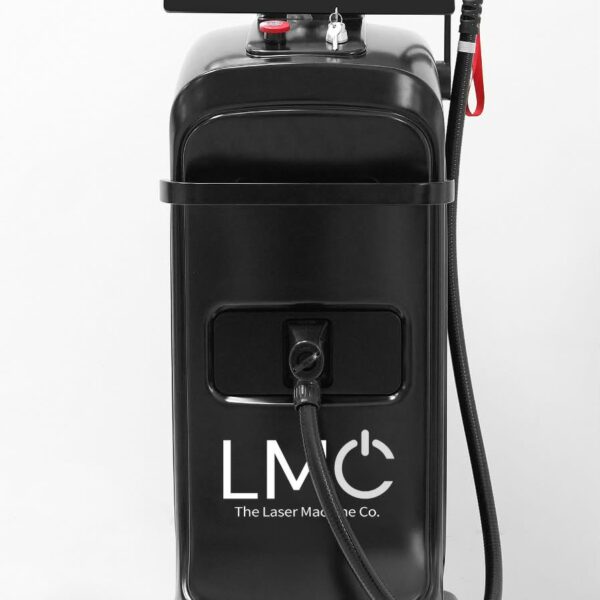
Buying a professional laser machine is one of the bigger financial decisions a clinic makes. Whether you're looking at a £3,999 Nd:YAG entry machine or a £16,999 dual system, paying the full amount upfront isn't the only option — and for most independent clinics, it isn't the right one either.
This guide covers every finance route available to UK clinic owners buying laser or aesthetic equipment in 2026: how each option works, what it actually costs, what lenders look for, and how to work out whether monthly payments make sense for your business before you commit to anything.
We'll also be straight about what LMC offers — and where other routes might work better for your situation.
IN THIS GUIDE
- Why finance often makes more sense than paying upfront
- Finance options available to UK clinics
- What finance actually costs — worked examples
- What lenders look for — and how to improve your chances
- LMC machines available on finance
- Finance with bad credit or a new business
- Finance red flags to watch for
- Does the machine pay for itself? Working out your ROI
- Frequently asked questions
Why Finance Often Makes More Sense Than Paying Upfront
It's not just about not having the cash — there's a genuine business case for spreading the cost
The instinct is to pay outright if you can. No debt, no interest, no monthly obligation. But for equipment that generates recurring revenue, that logic doesn't always hold up.
Consider a clinic buying a £9,999 diode laser. If they pay cash, they've tied up nearly £10,000 of working capital in a single asset. That's money that can't be used for marketing, staffing, another treatment offering, or covering a slow month. If the machine generates £2,000/month in additional revenue from month one, they've effectively borrowed £10,000 at 0% from their own business — and spent 4–5 months just getting back to zero.
With finance at a reasonable rate, that same clinic pays roughly £250–£300/month over 36 months. The machine starts generating revenue from week one. The monthly repayment is covered by fewer than three hair removal sessions. Working capital stays intact.
Finance makes particular sense when:
- The machine will generate enough monthly revenue to cover repayments comfortably
- You have other uses for your cash (marketing, renovation, staffing)
- You're buying equipment that will last 7–10+ years — spreading cost over 3–4 years is rational
- You want to preserve an emergency fund rather than emptying it on equipment
- Tax treatment of monthly payments works in your favour (interest may be deductible)
When paying cash is better: if you have surplus funds sitting idle, the interest cost of finance exceeds what that money would otherwise earn, and you have no better use for the capital. For most growing clinics, that scenario is rare.
Finance Options Available to UK Clinics
Five routes to funding laser equipment — with honest assessments of each
1. Supplier finance
Some equipment suppliers, including LMC, offer finance arrangements directly. You pay a deposit, agree a term (typically 12–48 months), and pay the balance in fixed monthly instalments. The main advantage is simplicity — one conversation, one relationship. The main disadvantage is that rates may not be as competitive as specialist lenders, and terms vary significantly between suppliers.
Best for: Buyers who want simplicity and are comfortable with the supplier's terms. Always check the total amount repayable and APR — not just the monthly payment.
2. Hire purchase (HP)
You pay a deposit then fixed monthly payments over an agreed term, typically 24–60 months. At the end of the term, you own the machine outright (sometimes after a small option-to-purchase fee). The machine acts as the security for the loan, which makes approval more accessible for businesses that don't have significant assets. Interest is fixed, so your monthly payments don't change. HP is usually arranged through specialist asset finance brokers or your business bank.
Best for: Most clinics buying equipment they intend to keep long-term. The most common route for aesthetic equipment purchases in the UK.
3. Finance lease
With a lease, you pay to use the machine but never own it. Monthly payments are typically lower than HP, and at the end of the primary lease period you either extend, upgrade to a new machine, or return it. The leasing company claims capital allowances rather than you, which means you can't offset the asset cost against tax — though the lease payments themselves are deductible as a business expense. Leasing suits clinics that want to upgrade equipment regularly or prefer to keep assets off the balance sheet.
Best for: Clinics that plan to upgrade equipment every 3–5 years, or those where lower monthly payments are a priority. Total cost over five years usually exceeds the machine's value.
4. Business loan
An unsecured or secured business loan from a bank or alternative lender covers the full purchase cost, which you then repay over an agreed term. Unlike HP, you own the machine from day one and the loan isn't tied to the asset. Interest rates on unsecured business loans are typically higher than asset finance (8–25% APR depending on your profile), and approval depends more heavily on business trading history and personal credit. Providers include high street banks, Funding Circle, Iwoca, and Tide.
Best for: Established businesses with strong credit who want flexibility, or clinics buying multiple items and wanting a single loan rather than multiple asset finance agreements.
5. 0% credit card / personal finance
For smaller machine purchases (£2,000–£5,000), a 0% purchase credit card or personal loan can be a legitimate route — particularly for sole traders or new businesses without trading history for a business loan. A 0% card with a 20–24 month window effectively gives you interest-free finance if cleared in time. The risk: if not cleared before the 0% period ends, the revert rate (typically 20–30% APR) kicks in on the remaining balance.
Best for: Sole traders or new businesses buying lower-cost machines who are confident they can clear the balance within the 0% window.
What Finance Actually Costs — Worked Examples
Real numbers across different machine prices and term lengths
Monthly payment figures are what suppliers lead with, but the number that matters is the total amount repayable — the machine price plus all interest over the term. These examples use a representative 10% APR, which is achievable for most established UK businesses with decent credit through asset finance.
| Machine Price | Deposit (10%) | 24 months | 36 months | 48 months | Total repayable (36m) |
|---|---|---|---|---|---|
| £3,999 | £400 | £164/mo | £115/mo | £91/mo | ~£4,540 |
| £5,999 | £600 | £245/mo | £172/mo | £136/mo | ~£6,792 |
| £9,999 | £1,000 | £409/mo | £287/mo | £227/mo | ~£11,332 |
| £10,999 | £1,100 | £450/mo | £315/mo | £249/mo | ~£12,440 |
| £16,999 | £1,700 | £695/mo | £487/mo | £385/mo | ~£19,232 |
⚠ These are indicative figures only
Actual rates depend on your business credit profile, trading history, and the lender's assessment. Rates for new businesses or those with adverse credit history will be higher. Always get a formal quote with the APR clearly stated before signing anything.
The real cost of finance
On a £9,999 machine over 36 months at 10% APR, you'll pay approximately £1,333 in interest — about 13% of the machine's value. That's the cost of preserving £8,100 in working capital for three years. Whether that's worth it depends entirely on what else you'd do with that cash and how quickly the machine generates returns.
The key question isn't "can I afford the interest?" — it's "does the additional revenue the machine generates justify both the repayments and the interest cost?" In almost every realistic scenario for an active clinic, the answer is yes.
What Lenders Look For — and How to Improve Your Chances
Understanding the approval process before you apply
Asset finance lenders are generally more accessible than unsecured lenders because the machine itself is the security — they can repossess it if you stop paying. That said, approval isn't guaranteed. Here's what they assess:
Business credit profile
Lenders check your business credit report (via Experian Business, Creditsafe, or Dun & Bradstreet). They're looking for: no CCJs against the business, no history of late payments to suppliers, and no recent credit applications that suggest financial stress. If your business is a limited company, the report reflects the company's history. Sole traders are assessed on personal credit as well.
Trading history
Most asset finance lenders prefer businesses with at least 12 months of trading history. Some will consider newer businesses with a strong personal credit profile and a reasonable deposit (typically 20–30% rather than 10%). Brand new businesses (under 6 months) will find mainstream lenders difficult — see the bad credit / new business section below.
Affordability
Lenders want to see that the monthly repayment is affordable relative to your business income. If your business turns over £2,000/month and you're applying for £400/month in repayments, that's a high debt-to-income ratio. Being able to demonstrate existing revenue — ideally with bank statements — strengthens your application considerably.
Deposit
A larger deposit reduces lender risk and improves approval chances. Standard deposits are 10%, but offering 20–25% upfront can be the difference between approval and decline, particularly for businesses with thinner credit files.
How to improve your chances before applying
- Check your business credit report before applying — fix any errors first
- Ensure your business address and registration details are up to date at Companies House
- Have 3–6 months of business bank statements ready
- Avoid multiple credit applications in a short period — each hard search affects your score
- Use a broker who can do a soft search first (no credit impact) to identify the best lender for your profile
LMC Machines Available on Finance
Every machine in our range with indicative monthly payments
Finance is available on all LMC and CMC machines. Monthly figures below are indicative at 10% APR over 36 months with a 10% deposit — your actual rate depends on your application.
ENTRY · TATTOO REMOVAL
LMC ND:YAG Pro 4
£3,999
From ~£115/mo over 36 months
The entry-level Nd:YAG for clinics starting out with tattoo removal. Capable 1064nm/532nm system at the most accessible price point in the range.
Ideal for: New clinics adding tattoo removal as a first laser treatment
View LMC ND:YAG Pro 4 →MID-RANGE · TATTOO REMOVAL
LMC ND:YAG PRO X Android
£5,999
From ~£172/mo over 36 months
The upgraded Nd:YAG with Android touchscreen interface, higher output, and improved control over treatment parameters. A step up for clinics that need more precision or higher volume capability.
Ideal for: Established clinics upgrading from an entry system or starting with a higher-spec machine
View LMC ND:YAG PRO X →PROFESSIONAL · HAIR REMOVAL
LMC Diode Lux Pro
£9,999
From ~£287/mo over 36 months
808nm diode laser for professional hair removal across Fitzpatrick I–V skin types. Standard and SHR in-motion modes, contact cooling, multiple spot sizes. The most popular hair removal machine in the LMC range.
Ideal for: Clinics adding laser hair removal as a core revenue treatment
View LMC Diode Lux Pro →DUAL CAPABILITY · TATTOO + HAIR REMOVAL
LMC Dual Lux Pro
£10,999
From ~£315/mo over 36 months
Nd:YAG (1064nm/532nm) combined with 1200w diode in a single system. Two revenue streams from one machine and one monthly payment. The 1600w diode variant is available at £10,999.
Ideal for: Clinics wanting to offer both tattoo removal and hair removal without buying two machines
View LMC Dual Lux Pro →PREMIUM · DUAL CAPABILITY
LMC Vertical Dual Lux Elite
£16,999
From ~£487/mo over 36 months
The high-output floor-standing dual system. Higher wattage across both modules, built for busy clinics running consistent treatment volume. Finance makes the most sense on this machine — spreading £16,999 over 36–48 months keeps monthly costs manageable against the revenue it generates.
Ideal for: Established clinics with high treatment volume ready to invest in a flagship machine
View LMC Vertical Dual Lux Elite →WhatsApp us to discuss finance options on any machine — we'll give you a straight answer on what's available and help you work out which route makes sense for your situation.
Want to Talk Through Finance Options?
We can walk you through what's available, give you indicative monthly payments, and help you work out whether the numbers make sense for your clinic — no obligation.
Video/Zoom calls available UK-wide · In-person visits welcome at our Rossendale clinic
Finance With Bad Credit or a New Business
It's harder, but there are realistic options
Adverse credit or limited trading history makes mainstream asset finance harder to access, but it doesn't close off every route. Here's what's realistic:
Higher deposit
Offering 25–40% upfront rather than 10% significantly reduces lender exposure. Some specialist lenders will approve applications with adverse credit if the deposit is large enough. This isn't ideal if cash preservation is the goal, but it may be the only route that works.
Specialist adverse credit lenders
There are UK asset finance brokers who specifically work with businesses that have had CCJs, defaults, or limited credit history. Rates will be higher (15–25% APR is common), and terms may be shorter. The monthly payment will be steeper, but the option exists. Searching for "adverse credit asset finance UK" or "bad credit equipment finance" will surface brokers in this space — always check they're FCA-authorised.
Start with a lower-cost machine
If finance on a £10,000 machine isn't accessible right now, starting with the LMC ND:YAG Pro 4 at £3,999 — paid outright or on a smaller finance agreement — lets you start generating revenue and building a trading track record. After 12 months of solid trading, mainstream finance on a larger machine becomes much more accessible.
Personal guarantee
For limited companies with thin credit files, many lenders will approve finance if a director provides a personal guarantee — meaning the individual is personally liable if the business defaults. This isn't something to sign without understanding the implications, but it's a common route for newer businesses buying equipment on credit.
Finance Red Flags to Watch For
What to look out for before you sign a finance agreement
Monthly payment quoted without APR
If a supplier or broker leads with a monthly payment but won't clearly state the APR, that's a sign the total cost is something they'd rather you didn't calculate. Always ask: "What is the APR on this agreement, and what is the total amount repayable?" If they can't answer clearly, walk away.
Balloon payments buried in the small print
Some lease agreements have a large final "balloon" payment to retain or purchase the equipment at the end of the term. This keeps monthly payments lower but means you owe a lump sum at the end. Make sure you understand the full payment schedule before signing, including what happens at end of term.
Pressure to finance a machine you haven't verified
Some suppliers use finance as a way to move machines quickly — framing the conversation around "only £X per month" before you've had a chance to evaluate whether the machine is the right one. The finance decision and the machine decision should be separate. Don't let favourable payment terms push you into a machine that doesn't suit your clinic.
Early repayment penalties
If your business does well and you want to pay off the finance agreement early, some lenders charge significant penalties. Check the early repayment terms before signing. HP agreements are generally more flexible here than finance leases.
Unregulated brokers
Business finance brokers in the UK don't always need to be FCA-authorised, but those arranging credit agreements for sole traders do. Check the FCA register before using any broker — if they're arranging finance and not on the register, you have fewer protections if something goes wrong.
Does the Machine Pay for Itself? Working Out Your ROI
The calculation every clinic should run before committing to finance
Finance only makes sense if the machine generates enough revenue to cover the repayments — ideally from the first month of operation. Here's a simple framework for working that out before you apply:
The finance sense-check
Step 1: What is the monthly repayment on the finance agreement?
e.g. £287/month on a £9,999 machine over 36 months
Step 2: What will you charge per treatment session?
e.g. £80 per hair removal session
Step 3: How many sessions do you need per month to cover the repayment?
£287 ÷ £80 = 3.6 sessions
Step 4: Is that realistic in month one, even conservatively?
Most clinics book 8–20+ sessions per month within the first few weeks. 4 sessions to cover repayments is a very low bar.
Worked examples by machine
| Machine | Monthly payment (36m) | Sessions to break even/mo | At 15 sessions/mo profit |
|---|---|---|---|
| ND:YAG Pro 4 (£3,999) | ~£115 | 2 sessions @ £80 | ~£1,085/mo net |
| Diode Lux Pro (£9,999) | ~£287 | 4 sessions @ £80 | ~£913/mo net |
| Dual Lux Pro (£10,999) | ~£315 | 4 sessions @ £100 | ~£1,185/mo net |
| Vertical Dual Lux Elite (£16,999) | ~£487 | 5–6 sessions @ £100 | ~£1,013/mo net |
Net figures assume £80–£100 average session value and don't account for consumables, insurance, or practitioner time. Even with those deducted, the margin on laser treatments is strong — typically 60–75% net after running costs for a sole practitioner.
Frequently Asked Questions
The questions we get asked most about financing laser equipment
Can I finance a laser machine as a new business?
It's harder but not impossible. Most mainstream asset finance lenders prefer 12+ months of trading history. If you're brand new, options include a higher deposit (25–40%), a personal guarantee, supplier finance which may have more flexible criteria, or starting with a lower-cost machine you can buy outright to build your trading history first.
What deposit do I need for laser machine finance?
Typically 10% for established businesses with good credit. If your credit profile is thinner or you have some adverse history, lenders may require 20–30% to reduce their exposure. A larger deposit also gives you access to better interest rates in most cases.
What's a typical interest rate for aesthetic equipment finance?
For established UK businesses with decent credit, asset finance rates typically run 7–12% APR. Newer businesses or those with some adverse credit history will be looking at 12–20% APR. Anything above 25% should prompt you to look at alternative routes — either a higher deposit to access better rates, or a different finance structure.
Is it better to lease or buy on hire purchase?
For most independent clinics buying a machine they plan to keep for 7–10 years, hire purchase is better — you own the machine at the end and can claim capital allowances on the asset. Leasing makes more sense if you want lower monthly payments, plan to upgrade regularly, or prefer to keep equipment off your balance sheet. The total cost of leasing over five years almost always exceeds the machine's value, so factor that in.
Can I pay off the finance early?
Usually yes, but check the terms first. Hire purchase agreements generally allow early settlement — you'll pay the remaining capital plus a reduced interest charge. Finance leases are less flexible; some have significant early termination fees. Always ask about early repayment before signing.
Does taking finance affect my credit score?
The application will involve a hard credit search, which temporarily affects your score. Once the agreement is in place and you make payments on time, it will build your business credit profile positively. Missing payments will have the reverse effect. Don't make multiple finance applications in a short period — each hard search reduces your score and makes subsequent lenders warier.
What happens if the machine breaks down while I'm still paying for it?
Your obligation to repay the finance continues regardless of the machine's condition — the finance agreement is separate from the machine warranty. This is why machine warranty and after-sales support matters: a broken machine with 18 months of payments left is a significant problem. Always check what warranty is included and what UK service support looks like before buying. LMC includes a warranty with all machines and provides UK-based support.
Can I finance multiple machines at once?
Yes. Many clinics build out their treatment menu by financing machines sequentially — one machine to start generating revenue, then a second once the first is established. You can also finance multiple machines simultaneously through a single asset finance agreement, which simplifies administration. Lenders will assess combined affordability across all agreements.
Do I need to tell my insurer I've financed the machine?
Yes, and it's important. Your professional liability insurer needs accurate information about the equipment you're using — how it was financed doesn't typically affect your premium, but some insurers require disclosure. More importantly, if you're using a finance lease (rather than HP), the lender technically owns the machine — your insurer needs to know this to ensure the right parties are covered in the event of loss or damage.
Ready to Talk Numbers?
We'll give you straight answers on finance options — no pressure, no scripts
Whether you're ready to apply or just working out whether the numbers stack up, we're happy to talk it through. We can give you indicative monthly payments on any machine, explain what finance routes are typically available for your situation, and let you see the machines over a Zoom call before you commit to anything.
OPTION 1
Book a Demo Call
Video or Zoom with Alex or Dawn. See the machines, discuss finance, get honest answers. UK-wide.
Book Demo Call →OPTION 2
Visit Us in Rossendale
Based in Lancashire or nearby? Come in, see the machines in person, and talk it all through face to face.
Arrange a Visit →OPTION 3
WhatsApp Us
Know which machine you're interested in? Message us and we'll come back quickly with payment options.
WhatsApp Us →THE LASER MACHINE CO · CONTACT