
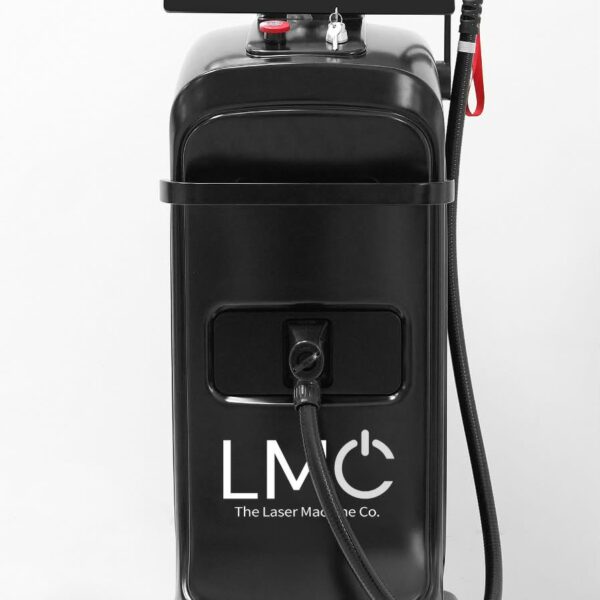
Dual Laser Machines: Everything UK Clinics Need to Know
Buying one machine that does two things well — or two machines that each do one thing better
A dual laser machine — one system combining both tattoo removal and laser hair removal — is one of the most commercially attractive pieces of equipment a UK clinic can invest in. Two revenue streams, one capital outlay, one footprint on the treatment room floor.
But the pitch is seductive, and the market is full of machines that compromise on both rather than excelling at either. This guide cuts through the noise: what dual laser machines actually are, how the technology works, what to expect at each price point, which types of clinic genuinely benefit from one, and where buying two separate machines is the better call.
All prices quoted are for professional-grade equipment sold in the UK, inclusive of training and warranty. No finance-only pricing, no import estimates.
IN THIS GUIDE
- What is a dual laser machine?
- How the technology works: ND:YAG + diode in one system
- UK price ranges and what you get at each level
- The LMC dual laser range
- Which clinics benefit most — and which don't
- Dual machine vs. two separate machines
- Hidden costs and running expenses
- Finance options
- Red flags when buying
- ROI: what the numbers look like
- Frequently asked questions
What Is a Dual Laser Machine?
Two laser systems in one chassis — but not all are built the same way
A dual laser machine houses two distinct laser technologies in a single unit. In the context of tattoo removal and laser hair removal, the combination is almost always:
- ND:YAG (Q-switched or Pico) — the gold standard for tattoo removal, operating at 1064nm and 532nm wavelengths. Delivers high-energy nanosecond or picosecond pulses that shatter tattoo ink without damaging surrounding tissue.
- Diode laser — the preferred technology for permanent hair removal, typically 808nm or 755/808/1064nm triple-wavelength. Works by targeting melanin in the hair follicle to disable growth over a course of sessions.
These two systems are physically integrated into one machine — sharing a housing, a power source, a screen, and often a common handpiece dock — but they operate independently. Switching between tattoo removal and hair removal is a matter of selecting the mode and attaching the relevant handpiece. You are not using both simultaneously.
The practical benefit is straightforward: one machine on the treatment room floor, one service agreement, one operator learning curve, and a much lower combined capital cost than purchasing two separate professional-grade devices.
Important distinction: combined vs. hybrid
Some manufacturers advertise machines as "dual" when they are actually a single ND:YAG system with a hair removal attachment that uses the same laser at modified settings. This is not the same as a true dual system with a dedicated diode module. A genuine dual machine has two independent laser sources — check this in the spec sheet before buying.
How the Technology Works
ND:YAG for tattoo removal, diode for hair removal — two fundamentally different mechanisms
ND:YAG for tattoo removal
Q-switched ND:YAG lasers deliver energy in nanosecond bursts — billionths of a second. This ultra-short pulse duration is what makes tattoo removal possible: the ink particles absorb the energy and shatter into smaller fragments that the body's lymphatic system can then clear. Surrounding tissue absorbs minimal energy because the pulse is too brief to generate significant heat transfer.
The 1064nm wavelength targets darker inks (black, dark blue, dark green). The 532nm wavelength — produced by passing the 1064nm beam through a KTP crystal — targets red, orange, yellow, and lighter inks. Professional machines include both wavelengths and allow you to switch between them.
Picosecond ND:YAG machines deliver pulses measured in trillionths of a second, which is more effective on resistant inks and requires fewer sessions — but they cost significantly more. For most clinic setups, Q-switched is the practical starting point.
Key spec to check: fluence (energy density, measured in J/cm²) and spot size. Higher fluence at a given spot size means more energy on target. Machines that quote only maximum fluence without spot size information should be approached with scepticism.
Diode for laser hair removal
Diode lasers work on the principle of selective photothermolysis — targeting melanin (the pigment) in the hair follicle without damaging the surrounding skin. The laser heats the follicle to a temperature that disables or destroys its ability to produce new hair.
808nm is the standard diode wavelength for hair removal. It penetrates to the depth of the hair follicle and is absorbed effectively by eumelanin — the pigment in darker hair. Triple-wavelength diode systems (755nm + 808nm + 1064nm) extend the treatment range to lighter hair types and darker skin tones.
Key specs to check: output power (watts), spot size, repetition rate (Hz), and whether the handpiece has contact cooling. Higher wattage allows faster treatment of large areas. Cooling is critical — it protects the epidermis during hair removal and is non-negotiable in a professional setting.
Why these two technologies pair well
ND:YAG and diode serve entirely different client profiles and appointment types. Tattoo removal clients come in every 6–8 weeks for shorter sessions. Hair removal clients come in monthly for longer treatment times. They share a treatment room and machine but rarely the same appointment slot — meaning the dual machine is genuinely utilised across a wider portion of your working week than a single-purpose machine would be.
UK Price Ranges for Dual Laser Machines
What you actually get at £5,000, £9,000, and £11,000+
The dual laser machine market in the UK spans roughly £5,000 to £30,000+ for professional-grade equipment. The majority of clinic-ready options with proper certification, training, and warranty sit in the £8,000–£15,000 range. Here's what to expect at each tier.
ENTRY LEVEL · £3,000–£6,000
This bracket mostly contains ND:YAG-only machines with a basic hair removal attachment, or low-power diode units paired with a budget ND:YAG. Output power on the hair removal side tends to be limited (under 500W), restricting treatment times on larger body areas. Suitable for very light use or practitioners exploring the market, but unlikely to sustain a full treatment schedule without client complaints about efficacy.
Caution: Machines at this price point are frequently sold without UKCA or CE marking, insurance-compatible documentation, or genuine UK supplier support. Verify before purchase.
MID-RANGE · £7,000–£12,000
The most commercially practical tier for most UK clinics entering dual laser services. Proper Q-switched ND:YAG with 1064nm/532nm, paired with a dedicated diode module of 500W–1,200W. Includes contact cooling, adequate fluence for most skin types, and — from reputable UK suppliers — training and insurance-compatible certification.
Best for: Clinics new to laser services, tattoo studios adding removal, salons expanding into laser hair removal with a secondary tattoo removal offering.
PROFESSIONAL · £12,000–£20,000+
High-output diode (1,200W–1,600W+) with a full-spec ND:YAG, triple-wavelength hair removal capability, large spot size handpieces for faster body treatments, and the build quality expected for sustained clinical use. Vertical systems at this tier offer ergonomic advantages for busy multi-therapist environments.
Best for: Established clinics scaling laser services, multi-therapist environments, practices where laser is a primary revenue driver rather than a secondary offering.
The LMC Dual Laser Range
Two machines built for UK clinics — both include training and warranty
The Laser Machine Co supplies two dual laser systems: the Dual Lux Pro and the Vertical Dual Lux Elite. All prices below are inclusive of operator training and a full warranty — there is no hidden setup fee or additional certification cost.
MID-HIGH · DUAL LASER
LMC Dual Lux Pro 1600w
£10,999
Includes training & warranty
A Q-switched ND:YAG (1064nm/532nm) paired with a high output 1600w diode module. The increased wattage allows faster treatment of larger body areas — full legs, backs, and similar — without extending session times to the point where they affect your schedule. The preferred choice for clinics where hair removal is the primary laser revenue stream and tattoo removal is complementary.
Ideal for: Clinics where laser hair removal is a core service, multi-therapist setups, established practices scaling capacity
View LMC Dual Lux Pro 1600w →PROFESSIONAL · DUAL LASER
LMC Vertical Dual Lux Elite
£16,999
Includes training & warranty
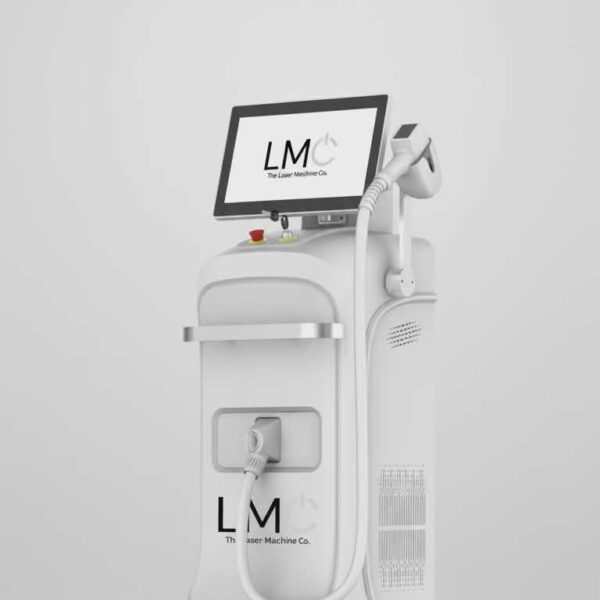
The flagship dual system in the LMC range. A vertical-format machine — tower-mounted rather than desktop — with the full ND:YAG spec alongside a high-output diode module designed for sustained clinical use. The vertical format improves ergonomics in busy treatment rooms, reduces handpiece cable management issues, and signals a clinical-grade setup to clients. Built for environments where both laser services are high-volume.
Ideal for: High-volume laser clinics, multi-therapist setups, practices where both tattoo removal and hair removal are primary services
View LMC Vertical Dual Lux Elite →Not sure which dual laser system is right for your clinic?
We can walk you through both options on a free demo call — see the machines in action and ask the questions that matter before committing.
Video/Zoom calls available UK-wide · In-person visits welcome at our Rossendale clinic
Which Clinics Benefit from a Dual Laser Machine?
The honest answer — and the cases where it is the wrong choice
A dual laser machine makes commercial sense in specific situations. In others, it is the wrong investment.
Good fit
Tattoo studios adding removal
A tattoo studio already has a client base with tattoos. Some of those clients will want removal or lightening for cover-up work. Adding hair removal alongside creates a genuinely complementary second service without requiring a new client acquisition strategy.
Beauty salons diversifying into laser
A salon already offering waxing or threading has clients who are natural prospects for laser hair removal. Adding tattoo removal with the same machine allows the business to serve both audiences without doubling its equipment spend.
PMU and SMP practitioners
Permanent makeup artists and scalp micropigmentation practitioners frequently need to lighten or remove their own previous work. A dual laser machine lets them offer removal in-house while also building a hair removal revenue stream alongside their primary service.
Clinics with limited floor space
One machine instead of two is a meaningful advantage in a compact treatment room. Dual laser frees up space that would otherwise be occupied by separate units and their associated cable and handpiece storage.
Practitioners qualifying in both services simultaneously
If you are completing training in both tattoo removal and laser hair removal at the same time, a dual machine allows you to begin both services immediately rather than staging two separate equipment purchases.
Not a good fit
Clinics where one service is dominant
If 90% of your revenue will come from laser hair removal, a dedicated high-power diode machine will outperform a dual system at a similar price point. You pay for the ND:YAG module you rarely use, and the diode spec is often a compromise. The same applies in reverse.
High-volume hair removal operations
A busy laser hair removal clinic running 8–10 appointments a day needs maximum diode output and the fastest possible treatment speeds. A 1,600W diode in a dual machine is good; a standalone 2,000W+ diode machine is better for this use case.
Resistant ink or complex tattoo removal specialists
If you intend to build a reputation around difficult tattoo removal — multi-coloured, layered, or heavily saturated work — a dedicated picosecond ND:YAG system will deliver better clinical outcomes than the Q-switched modules in most dual machines. The dual laser is a practical all-rounder, not a specialist tool.
Dual Machine vs. Two Separate Machines
A direct comparison — cost, performance, scheduling, and risk
This is the question most buyers get to eventually. Here is a straightforward breakdown.
| Factor | Dual Machine | Two Separate Machines |
|---|---|---|
| Capital cost | £10,999–£16,999 | £14,000–£25,000+ (combined) |
| Floor space | One machine footprint | Two machine footprints |
| Performance ceiling | Competent on both; specialist on neither | Best-in-class on both if specified correctly |
| Scheduling | One machine = cannot run both services simultaneously | Two machines = two therapists can treat at the same time |
| Downtime risk | One machine down = both services unavailable | One machine down = other service continues |
| Service agreements | One contract, one relationship | Two contracts, potentially two suppliers |
| Best for | Starting out, limited capital, limited space | Scaling an established laser business |
The scheduling point is worth dwelling on. With one dual machine, you cannot treat a tattoo removal client in room 1 while a therapist does a full-leg hair removal in the same room at the same time. For most small clinics this is not an issue — but it becomes a constraint as your appointment book fills. If you reach the point where the machine is booked out, you will need either a second machine or a service choice.
For the majority of clinics starting or growing their laser offering, a dual machine is the right call. For an established, high-volume operation, two dedicated machines is worth the additional capital.
Finance Options
Spreading the cost across 24 or 36 months
All LMC machines are available on finance through Ideal4Finance. The structure is straightforward:
FINANCE TERMS
APR
15.9% fixed
Terms available
24 or 36 months
Optional deposit
£2,999
An optional £2,999 deposit reduces your monthly payments and the total amount repayable. Use the finance calculator on the finance page to see exact figures for each machine.
As a reference point: the LMC Dual Lux Pro 1600w at £10,999 over 36 months (no deposit) works out at approximately £380/month. A single full-leg laser hair removal appointment in the UK typically charges £80–£150. The machine pays for its monthly finance cost in 3–5 appointments.
Finance is a practical way to acquire equipment without depleting working capital. It also means the machine starts generating revenue before it is fully paid for — which changes the business case significantly compared to a single upfront payment.
Red Flags When Buying a Dual Laser Machine
What to watch out for in a market with significant quality variation
The laser equipment market has a long tail of low-quality suppliers, rebranded budget hardware, and outright misrepresentation. These are the signals to look for.
-
No UKCA or CE marking or documentation
UKCA or CE certification is a baseline requirement for laser medical devices sold in the UK. If a supplier cannot provide the UKCA or CE declaration of conformity or deflects when you ask, stop the conversation. Without it, your insurance will not cover you and you may be operating an unregistered medical device.
-
Quoted specs without documentation
Any reputable supplier can provide a spec sheet. If a seller claims 1,600W output but cannot show you a manufacturer spec document with tested output figures, the number is marketing copy, not engineering fact.
-
Bank transfer only payment
Legitimate suppliers accept card payments or finance arrangements with a proper credit agreement. A seller who insists on bank transfer only — particularly from an unfamiliar or recently registered business — is a meaningful risk. Use protected payment methods for any significant equipment purchase.
-
Training described as a half-day or online-only
Insurance-compatible laser training requires in-person practical components with live models. Online-only certifications will not satisfy Hamilton Fraser, Balens, or equivalent UK aesthetic insurers. If the training offered with the machine is an online video course, it does not meet regulatory requirements.
-
No UK-based after-sales support
When a machine develops a fault — and all machines eventually do — your ability to get it repaired quickly determines how much revenue you lose during downtime. A supplier with no UK service team means sending hardware to China and waiting 4–8 weeks. Ask explicitly: who services this machine if it develops a fault, where are they based, and what is the typical turnaround time?
-
"Dual" machine that is a single laser with an attachment
As noted earlier — ask the supplier directly: does this machine have two independent laser sources, or is it one laser source with different handpieces? There is a meaningful clinical difference, and some suppliers deliberately obscure this in their marketing.
ROI: What the Numbers Look Like
A realistic worked example for the LMC Dual Lux Pro 1600w
The numbers below use UK market pricing and conservative appointment assumptions. They are intended as a planning reference, not a guarantee.
EXAMPLE — LMC DUAL LUX PRO 1600W AT £10,999
| Laser hair removal — small area (lip/chin) | £50–£80 per session |
| Laser hair removal — medium area (underarms, bikini) | £80–£120 per session |
| Laser hair removal — large area (full legs) | £120–£180 per session |
| Tattoo removal — small tattoo | £80–£120 per session |
| Tattoo removal — medium tattoo | £120–£200 per session |
Scenario: 4 hair removal appointments per day at £100 average + 2 tattoo removal appointments at £100 average = £600/day combined revenue.
4 days per week: £2,400/week · £9,600/month.
Machine cost recovery: At £9,600/month gross, the £10,999 machine cost is recovered in approximately 5–6 weeks of steady trading.
These are not aggressive projections. A single therapist working part-time could generate £3,000–£4,000/month from a dual laser machine with a modest but consistent client base. At full capacity, the figure is considerably higher.
The more relevant question for most buyers is not payback period but monthly cash flow — particularly on finance. At £380/month (Dual Lux Pro 1600w, 36 months, no deposit), you need to generate £380 in revenue from the machine before it starts contributing profit. That is three or four hair removal sessions per month. The threshold is low.
Frequently Asked Questions
The questions we get most often about dual laser machines
Can I use a dual laser machine to treat all skin tones for hair removal?
Standard 808nm diode systems are suitable for Fitzpatrick skin types I–IV with appropriate settings. Treating type V–VI skin safely requires careful parameter control, significant experience, and — ideally — triple-wavelength capability (755/808/1064nm) which extends safe treatment range. If your client base includes predominantly darker skin tones, discuss this specifically when choosing a machine. Ask for the Fitzpatrick range in the spec documentation.
Do I need separate qualifications for tattoo removal and hair removal?
Yes. Tattoo removal and laser hair removal are treated as distinct specialisms by UK insurers and regulatory bodies. You need a Level 5 qualification in laser tattoo removal and a separate Level 5 in laser hair removal. Both sit on top of the Level 4 Core of Knowledge in laser/IPL. Training included with LMC machines covers both — but verify the scope of the qualification with your insurer before starting.
How many sessions does laser hair removal typically take?
Most clients need 6–10 sessions spaced 4–6 weeks apart for significant permanent reduction. The precise number depends on hair colour, hair thickness, skin tone, treatment area, and individual response to the laser. This session volume is what makes hair removal commercially attractive — multiple return visits per client, reliably scheduled.
How many sessions does tattoo removal typically take?
The range is wide: professional tattoos typically require 8–15 sessions; amateur tattoos often clear in 4–8. Ink colour, depth, density, client age, and immune response all affect the number. Black ink clears fastest. Multi-coloured, heavily saturated, or layered tattoos take longer and may not fully clear with a Q-switched system alone.
Is a dual laser machine suitable for SMP removal?
Yes — the ND:YAG module in a dual machine is used for SMP (scalp micropigmentation) removal in the same way it is used for tattoo removal. SMP typically clears in 2–3 sessions given the shallow ink placement and relatively low pigment density, making it a fast-turnaround service with a growing client base as more people seek to modify or remove previous SMP work.
Can one person operate a dual laser machine for both services on the same day?
Yes. Switching between modes requires selecting the appropriate setting and attaching the correct handpiece — it takes under a minute. There is no technical barrier to treating a tattoo removal client in one appointment and a hair removal client in the next. This is exactly how most dual machine operators run their schedules.
What maintenance does a dual laser machine require?
Routine maintenance includes cleaning handpieces and connectors, checking cooling water levels (on water-cooled systems), and ensuring filters are clear. Annual servicing by a qualified technician is standard practice. The diode handpiece has a finite shot life and will need replacement at intervals depending on usage volume — factor this into your running cost calculation.
What is the warranty on LMC dual laser machines?
All LMC machines include a warranty as part of the purchase price. Specific terms — duration, what is covered, and the service arrangement — are confirmed at point of purchase. Contact us directly to discuss the warranty detail for the specific machine you are considering.
Can I see the machines working before I buy?
Yes. You can book a video demo call with Alex or Dawn to see the machines in operation and ask any technical questions before committing. If you are based in Lancashire or the North West, you are also welcome to visit the Rossendale clinic in person — the machines are used daily in the working clinic, not just in a showroom.
Which dual laser machine is right for my clinic?
The short answer depends on your primary service and budget. The Dual Lux Pro 1200w suits clinics entering both services for the first time. The Dual Lux Pro 1600w is the better choice if hair removal will be your main revenue driver. The Vertical Dual Lux Elite suits high-volume, multi-therapist environments. The finance calculator on the LMC finance page lets you compare monthly costs for each machine side by side.
See the Machines in Action Before You Buy
No obligation — just an honest conversation about what's right for your clinic
All LMC dual laser machines are used daily in a working clinic — not sitting in a warehouse or showroom. When you book a demo, you see exactly how they perform in a real treatment setting. If a different machine is better suited to what you are trying to build, we will tell you.
OPTION 1
Book a Demo Call
Video or Zoom with Alex or Dawn. See the machines, get honest answers. UK-wide.
Book Demo Call →OPTION 2
Visit Us in Rossendale
Based in Lancashire or nearby? Come see the machines working in person.
Arrange a Visit →OPTION 3
Request a Quote
Know what you want? Send a WhatsApp and we'll come back to you fast.
WhatsApp Us →THE LASER MACHINE CO · CONTACT