
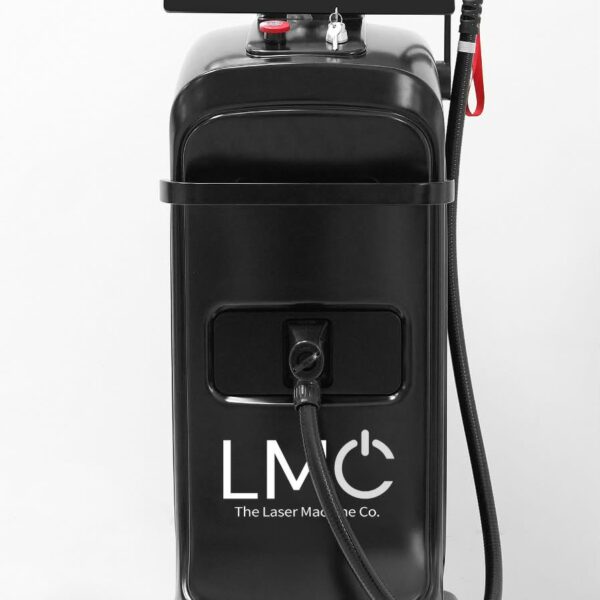
If you're researching professional hair removal machines for your clinic, diode laser comes up almost immediately — and for good reason. It's the dominant technology in the UK professional market, used in everything from independent salons to dedicated laser clinics, and the results it delivers across a wide range of skin and hair types have made it the go-to choice for most practitioners.
But "diode laser" covers a wide range of machines. A £2,000 machine and a £15,000 machine can both carry that label. Understanding what actually separates them — and what specs matter for your clinic — is the difference between a purchase that pays back in months and one that creates headaches for years.
This guide covers everything UK clinic owners need to know about professional diode laser hair removal machines: how the technology works, what specs matter, how diode compares to IPL and other technologies, and what the best options look like at different price points — including our own range with transparent pricing.
IN THIS GUIDE
- How diode laser hair removal actually works
- Diode vs IPL vs SHR vs Nd:YAG — honest comparison
- The specs that actually matter when buying
- Skin type suitability and treatment considerations
- LMC diode laser machines
- Diode laser machine price ranges in the UK
- Red flags and what to watch for when buying
- ROI and business case for UK clinics
- Frequently asked questions
How Diode Laser Hair Removal Actually Works
The science behind the treatment — and why it matters for buying decisions
Diode lasers emit a single, concentrated wavelength of light — typically 808nm, though some machines also offer 755nm (alexandrite) and 1064nm (Nd:YAG) wavelengths as secondary modes. That 808nm wavelength sits in a sweet spot: it's absorbed strongly by melanin (the pigment in hair follicles) while passing through the surrounding skin tissue with relatively low absorption.
When the laser pulse fires, melanin in the hair shaft and follicle absorbs the energy and converts it to heat. That heat damages the follicular stem cells responsible for hair regrowth — a process called selective photothermolysis. The goal is to heat the follicle enough to inhibit regrowth without damaging the surrounding dermis.
This is why the anagen (active growth) phase matters: hair follicles are only vulnerable when they're actively growing, because that's when the melanin concentration in the follicle is highest and the connection between the follicle and its blood supply is most direct. Follicles in the telogen (resting) phase are largely unaffected by the treatment. This is why multiple sessions spaced 4–8 weeks apart are required — each session targets the follicles that are in anagen at that time.
The role of cooling
Effective cooling is integral to how diode systems work — not just a comfort feature. The epidermis (outer skin layer) contains melanin too, which means it also absorbs laser energy. Without cooling, the skin surface would heat up along with the follicle, causing burns, hyperpigmentation, and pain. Contact cooling — where a chilled sapphire tip (typically cooled to between 0°C and 5°C) presses against the skin immediately before and during the pulse — protects the epidermis while allowing the follicle to absorb the full treatment energy.
This is one reason why cooling system quality is a key differentiator between budget and professional diode machines. A well-engineered cooling system enables higher fluence (energy per unit area), faster treatment, and more comfortable sessions — all of which affect your results and client retention.
Standard mode vs SHR (in-motion)
Most professional diode machines offer two treatment modes:
- Standard mode: Single pulses delivered stationary to each area. Higher fluence per pulse. Better for coarse hair and areas requiring precision.
- SHR (Super Hair Removal) / in-motion mode: The handpiece glides across the skin at a rapid repetition rate (typically 5–10Hz), delivering multiple lower-fluence pulses to each follicle cumulatively. Faster for large areas like legs and back, gentler for sensitive clients, and better tolerated on tanned skin.
Both modes work. The best machines offer both, giving you flexibility to select the right approach for each client and treatment area.
Diode vs IPL vs SHR vs Nd:YAG
An honest comparison of the four main hair removal technologies
Diode is not the only professional hair removal technology, and understanding where it sits relative to the alternatives is important before committing to a purchase. Here's a straight assessment of each:
Diode (808nm) — the professional standard for most clinics
The most widely deployed technology in UK professional settings. 808nm is highly effective across Fitzpatrick skin types I–V, penetrates to the right follicle depth for most body and facial hair, and the technology is mature enough that quality components are well-understood. Machines range from £3,500 to £18,000+ depending on specification. No ongoing consumable costs — this is a significant operational advantage over IPL.
Verdict: The right choice for most independent UK clinics. Broad skin type coverage, no consumables, proven results, accessible price range.
IPL (Intense Pulsed Light) — cheaper upfront, more expensive to run
IPL emits a broad spectrum of light (typically 500–1200nm) filtered to a treatment range, rather than a single focused wavelength. Machines are cheaper — £1,500–£6,000 for professional models — but the lack of wavelength precision means less targeted energy delivery to the follicle. IPL is generally less effective on darker skin tones (Fitzpatrick IV+) and finer hair, requires more sessions to achieve comparable results to diode, and carries ongoing lamp replacement costs of £200–£600 per lamp at every 30,000–100,000 shots. Over three years of regular use, the consumable costs can substantially erode the upfront price advantage.
Verdict: Better suited to multi-treatment platforms where IPL is one of several modalities, or lower-volume clinics treating predominantly lighter skin tones. Not the best standalone hair removal choice for a busy clinic.
SHR — a delivery method, not a separate technology
SHR (Super Hair Removal) is often marketed as a distinct technology but is better understood as an in-motion delivery method that can use diode, IPL, or other light sources. When you see "SHR machine" in the market, you need to check what light source is actually inside. The best professional SHR machines use diode as the source, offering the in-motion benefits (speed, comfort, large areas) with diode's precision. Most quality diode machines include an SHR mode alongside standard pulse mode.
Verdict: Not a separate buying decision from diode — look for a diode machine that includes SHR mode, rather than a "pure SHR" machine that may be IPL-based.
Nd:YAG (1064nm) — essential for darker skin tones
The 1064nm wavelength penetrates deeper and is absorbed less by melanin in the epidermis, making it significantly safer for Fitzpatrick V–VI skin types where diode at 808nm carries a meaningful risk of post-inflammatory hyperpigmentation. If a significant proportion of your client base has darker skin — particularly relevant for clinics in urban areas with diverse populations — Nd:YAG capability is important. The downside: Nd:YAG is generally slower and requires higher fluence for equivalent results on lighter skin types. Dual machines that combine 808nm diode with 1064nm Nd:YAG offer full skin type coverage from a single system.
Verdict: Essential if your client base includes Fitzpatrick V–VI. Consider a dual diode/Nd:YAG system rather than diode alone if this applies to your clinic.
| Technology | Skin Types | Consumables | Speed | Entry Cost |
| Diode 808nm | I–V | None | Fast | £3,500 |
| IPL | I–III | Lamps £200–£600 | Moderate | £1,500 |
| Diode SHR mode | I–V | None | Very fast | Included in diode |
| Nd:YAG 1064nm | I–VI | None | Moderate | £5,000 |
The Specs That Actually Matter When Buying
What to ask every supplier before you commit to anything
Supplier marketing materials are full of numbers. Most of them don't tell you much. These are the specs that actually determine how a diode machine performs in clinical use:
1. Peak power (wattage)
The peak power of the diode module — measured in watts — determines the maximum energy per pulse the machine can deliver. Higher wattage enables higher fluence (energy density), which translates to more effective treatment of coarser hair and faster sessions. Professional machines typically run 800W–1600W. Budget machines quoting "1200W" may be quoting peak power from a lower-quality diode bar that degrades quickly — always ask about the diode bar manufacturer alongside the wattage figure.
2. Fluence range (J/cm²)
Fluence is the energy delivered per unit area of skin — measured in joules per square centimetre. Most professional treatments for body hair require fluence in the range of 10–60 J/cm² depending on skin type and hair colour. A machine that maxes out at 30 J/cm² limits your ability to treat more challenging cases effectively. Check the maximum fluence, and check whether it's achievable at the spot sizes you'll actually use day-to-day.
3. Spot size
Spot size is the area of skin illuminated by each pulse — measured in cm². Larger spot sizes mean more skin covered per pulse, directly reducing treatment time. A 12cm² spot on the back completes the same area 3× faster than a 4cm² spot. Professional machines for body treatments should offer a large spot option (10–15cm²) alongside a smaller spot for facial work (2–5cm²). Some machines offer interchangeable spot sizes; others are fixed.
4. Repetition rate (Hz)
How many pulses per second the machine can deliver in SHR/in-motion mode. Higher repetition rates (8–10Hz) allow faster gliding speeds during in-motion treatments, covering more skin per minute. At 3Hz you're constrained to a slow, deliberate pace; at 10Hz the treatment flows quickly. For large area treatments (full legs, back, chest), repetition rate has a significant impact on the time per session and therefore your throughput.
5. Cooling system type and temperature
Contact cooling (sapphire tip chilled to 0°C–5°C) is the standard on professional machines. Some machines add in-motion air cooling alongside contact cooling. The temperature range matters — a tip that only cools to 10°C provides meaningfully less epidermal protection than one reaching 0°C, particularly when treating higher fluence on skin types III–V. Always ask for the cooling temperature specification, not just that "contact cooling is included."
6. Shot lifespan
The diode bar — the core component — degrades with use. Shot lifespan tells you how many pulses the machine is rated for before the handpiece or bar needs replacing. Professional machines are typically rated 10–20 million shots. Budget machines may quote 1–3 million. At 500 shots per session, a 5-million-shot machine reaches end of component life after roughly 10,000 sessions. Always ask what shot lifespan is guaranteed and what the handpiece or bar replacement cost is.
7. Diode bar manufacturer
This is the question most suppliers don't want to answer directly. The diode bar is the heart of the machine. Premium bars from manufacturers like Coherent, II-VI (now Coherent), or Jenoptik maintain output consistency over their rated lifespan and degrade gracefully. Cheaper bars from unspecified manufacturers may output correctly when new but lose power significantly within 12–18 months of regular use. If a supplier can't tell you who manufactured the diode bar, that's informative.
Skin Type Suitability and Treatment Considerations
Understanding Fitzpatrick skin types and how they affect diode treatment
The Fitzpatrick scale classifies skin into six phototypes based on melanin content and UV response. It's the standard framework for assessing laser hair removal suitability and risk. Here's how diode at 808nm performs across the scale:
| Fitzpatrick Type | Description | Diode 808nm Suitability | Notes |
| I–II | Very fair to fair, burns easily | Excellent | High contrast between skin and hair. Best results. |
| III | Medium, tans gradually | Very good | Standard treatment parameters. Common UK skin type. |
| IV | Olive/light brown, rarely burns | Good with care | Adjust fluence. Cooling more critical. Patch test essential. |
| V | Brown, tans easily | Caution required | Lower fluence, longer pulse width, thorough cooling. PIH risk. |
| VI | Dark brown/black | Not recommended | High PIH and burn risk. Use Nd:YAG 1064nm instead. |
Hair colour considerations
Diode laser — like all laser hair removal technologies — requires melanin in the hair to absorb the energy. This has a direct implication for treatment suitability by hair colour:
- Black and dark brown hair: Excellent results. High melanin content means maximum energy absorption.
- Medium brown hair: Good results across most skin types.
- Light brown or auburn hair: Reasonable results, may require more sessions.
- Blonde hair: Limited efficacy. Reduced melanin means reduced energy absorption. Manage client expectations clearly.
- Red hair: Generally poor results. Pheomelanin (red pigment) absorbs poorly at 808nm.
- Grey or white hair: Laser hair removal is not effective. No melanin to absorb treatment energy.
⚠ Consultation and patch testing
A proper consultation and patch test before every new client's first full treatment is both a clinical requirement and an insurance condition for most UK practitioners. The consultation should assess Fitzpatrick type, hair colour, recent sun exposure, and any medications that increase photosensitivity (isotretinoin, certain antibiotics). Never skip this, regardless of how straightforward the client appears.
LMC Diode Laser Machines
Our diode range — with transparent pricing and honest assessments
We supply three machines that include professional diode laser hair removal capability. All prices include initial training and a UK warranty. Here's exactly where they sit and who each one is right for:
DEDICATED · HAIR REMOVAL
LMC Diode Lux Pro
£9,999
Includes training & warranty
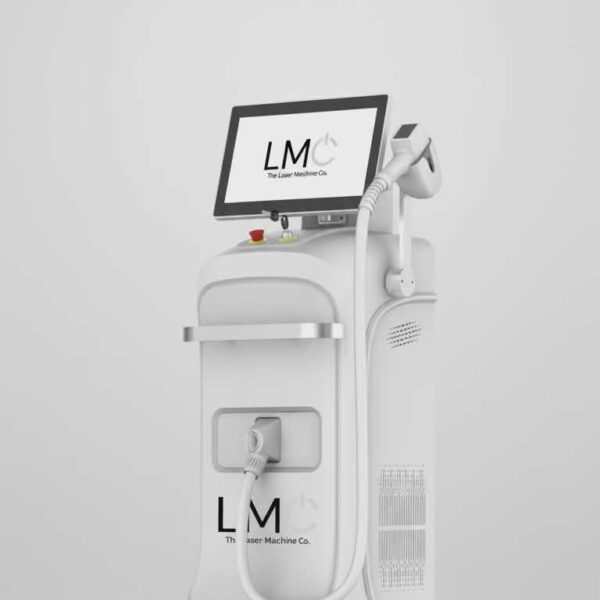
The Diode Lux Pro is our dedicated 808nm diode hair removal machine, built for clinics that want to run hair removal as a serious revenue service. It runs both standard and SHR in-motion modes, features contact cooling, and handles Fitzpatrick I–V skin types across all body areas — face through full legs. This is the right machine if hair removal is your primary or secondary service and you want a dedicated system for it.
Ideal for: Independent clinics and salons making laser hair removal a core revenue treatment
View LMC Diode Lux Pro →DUAL CAPABILITY · TATTOO + HAIR REMOVAL
LMC Dual Lux Pro
£10,999
Includes Training and warranty
The Dual Lux Pro combines a Nd:YAG module (1064nm/532nm for tattoo removal) with a 1600w diode module (808nm for hair removal) in one desktop system. If you want to offer both treatments without buying two separate machines, this is the practical route. The Nd:YAG component also extends hair removal capability to Fitzpatrick V–VI where diode alone carries higher risk.
Ideal for: Clinics wanting both tattoo removal and hair removal capability without buying two machines
View LMC Dual Lux Pro →PREMIUM · DUAL CAPABILITY
LMC Vertical Dual Lux Elite
£16,999
Includes training & warranty
The floor-standing version of the dual system with higher output across both the diode and Nd:YAG modules. Built for busier clinics where high treatment volume demands a more robust, higher-powered system. The vertical form factor suits dedicated treatment room layouts and delivers more headroom on fluence for both hair removal and tattoo treatments.
Ideal for: Established clinics with high treatment volume looking for a flagship system
View LMC Vertical Dual Lux Elite →Finance is available on all machines — from around £258/month over 36 months on the Diode Lux Pro. See our finance page or WhatsApp us to discuss options.
Want to See the Diode Lux Pro in Action?
We run free demo calls over Zoom — you can see the machine working, ask technical questions, and get actual prices. No pressure, no script.
Video/Zoom calls available UK-wide · In-person visits welcome at our Rossendale clinic
Diode Laser Machine Price Ranges in the UK
What different price points actually get you in 2026
Professional diode laser machines for UK clinics span a wide price range. Here's what each band realistically delivers:
| Price Band | Range | What You Get | Suited To |
| Entry | £1,500–£4,000 | Low-powered diode or IPL-based SHR, limited spot sizes, basic cooling, shorter shot life | Very low volume, home-based practitioners |
| Mid-range | £4,000–£7,000 | Professional diode with standard and SHR modes, contact cooling, multiple spot sizes | Clinics starting out or adding hair removal alongside existing services |
| Professional | £7,000–£15,000 | High-powered diode (800w–1600w), large spot sizes, robust cooling, long shot lifespan, UK support | Established clinics running consistent hair removal volume |
| Premium | £18,000–£50,000+ | Brand-name medical-grade systems (Candela GentleMax, Lumenis Splendor X, Cynosure Elite) | High-volume medical aesthetic clinics where brand recognition matters to clients |
The LMC Diode Lux Pro sits firmly in the professional band at £9,999 — high-powered, UK-supported, with training included. For most independent UK clinics, this range offers the best value: the specifications needed for clinical results without the brand premium that pushes the Candela and Lumenis systems beyond what the ROI typically justifies for a non-medical-grade clinic setting.
The £18,000+ medical-grade market exists and delivers quality — but the premium is partly brand recognition that matters in high-end medical aesthetics, not just machine performance. A well-specified £9,000 professional diode machine from a reputable supplier delivers clinically comparable hair removal results.
Red Flags When Buying a Diode Laser Machine
What to watch for before you sign anything
Wattage quoted without diode bar specification
"1200W diode" tells you the peak power claim. It doesn't tell you whether that's from a quality diode bar that will maintain output over millions of shots, or a lower-grade component that degrades within 18 months. Ask for the diode bar manufacturer — a supplier confident in their components will tell you without hesitation.
No UK-based service support
When a machine needs servicing or a component fails, you need someone who can actually fix it without a 6–8 week overseas turnaround. Ask specifically: "Is there a UK-based engineer? What is the typical repair turnaround time? What is the cost of a handpiece replacement?" If the answers are vague, factor in the realistic risk of extended downtime.
Shot lifespan not stated or suspiciously high
Budget machines sometimes quote "unlimited shots" — which typically means the manufacturer isn't prepared to stand behind a specific lifespan figure, or the quoted figure is theoretical peak rather than practical clinical use. Ask for the rated shot lifespan in writing, and ask what the handpiece replacement cost is when it's reached.
Training not included or surface-level only
Initial training should be included as standard and should cover practical operation on real skin — not just a PDF manual and a YouTube link. If training costs extra or isn't hands-on, factor that into the total purchase cost. Operating without proper training is both a safety issue and an insurance risk.
No CE documentation available
Class 3B and Class 4 laser devices require appropriate conformity documentation for legal use in UK clinical settings. Ask for the Declaration of Conformity — a legitimate supplier will have it ready. If it can't be produced, the machine's regulatory status for professional UK clinical use is unclear.
Fluence specs only quoted at small spot sizes
A machine that quotes "up to 120 J/cm²" but only achieves that at a 1cm² spot size is misleading you. Maximum fluence typically drops significantly as spot size increases. Ask: "What is the maximum fluence at the spot sizes I'll actually use for full leg treatments?" That's the number that matters for day-to-day clinical work.
ROI and Business Case for UK Clinics
What the revenue numbers actually look like for laser hair removal
Laser hair removal is one of the most financially productive treatments a UK clinic can offer. Session prices are high relative to treatment time, clients return for multiple sessions across a course, and the machines are long-lived. Here's a realistic look at the numbers:
UK session price benchmarks (2026)
| Area | Typical UK Price | Treatment Time | Sessions per Course |
| Upper lip | £40–£60 | 5–10 min | 6–8 |
| Underarms | £50–£80 | 10–15 min | 6–8 |
| Bikini / Brazilian | £60–£100 | 15–25 min | 6–8 |
| Half legs | £70–£100 | 20–30 min | 6–8 |
| Full legs | £90–£150 | 35–50 min | 6–8 |
| Full back (male) | £100–£200 | 30–45 min | 6–8 |
Payback period — LMC Diode Lux Pro (£9,999)
CONSERVATIVE
8 sessions/week
Avg. value: £80
Monthly revenue: ~£2,560
Payback: ~4 months
MODERATE
15 sessions/week
Avg. value: £90
Monthly revenue: ~£5,400
Payback: ~2 months
These are gross revenue figures — deduct running costs (insurance, consumables, practitioner time) for net. A realistic net margin on laser hair removal for a sole practitioner runs at 60–70%, making it one of the highest-margin treatments in the aesthetic space.
The recurring revenue model is particularly strong: a client completing a 6-session full leg course at £120/session generates £720 over a single treatment cycle, with annual top-up sessions thereafter. Client retention in laser hair removal is high because the treatment cycle creates an ongoing relationship and the results are visible. One well-looked-after client is worth far more than their first session fee.
Frequently Asked Questions
Answers to the questions we hear most from UK clinic owners
What is a diode laser hair removal machine?
A diode laser hair removal machine uses a semiconductor diode to generate a focused beam of laser light, typically at 808nm wavelength. That wavelength is absorbed by melanin in the hair follicle, generating heat that damages the follicle and inhibits regrowth — a process called selective photothermolysis. Diode at 808nm is the dominant professional hair removal technology in the UK due to its effectiveness across most skin types, speed, and lack of ongoing consumable costs.
How does diode laser compare to IPL for professional use?
Diode laser emits a single focused wavelength, IPL emits a broad spectrum. Diode is more precise, more effective across a wider range of skin types (I–V vs IPL's I–III), and has no consumable costs. IPL machines are cheaper upfront but incur lamp replacement costs and require more sessions for comparable results. For most professional UK clinics making hair removal a core service, diode is the better long-term choice.
How much does a professional diode laser machine cost in the UK?
Professional diode laser machines for UK clinics typically range from £4,000–£15,000. The LMC Diode Lux Pro is £9,999 including training and warranty. Medical-grade brand-name systems (Candela, Lumenis) cost £18,000–£50,000+. For most independent clinics, the professional band (£7,000–£15,000) delivers clinical results without the brand premium that's difficult to justify at lower treatment volumes.
What skin types can diode laser treat?
808nm diode laser is suitable for Fitzpatrick skin types I–V. Type VI (very dark skin) is not recommended with standard diode at 808nm due to the elevated risk of post-inflammatory hyperpigmentation — Nd:YAG at 1064nm is the appropriate technology for this skin type. If your client base includes a significant proportion of Fitzpatrick V–VI, consider a dual diode/Nd:YAG machine like the LMC Dual Lux Pro for full skin type coverage.
Does diode laser work on all hair colours?
No. Diode laser requires melanin in the hair to absorb the treatment energy. Dark hair (black and dark brown) responds best. Light brown and auburn hair produces reasonable results. Blonde, red, and grey/white hair is largely unresponsive — there's insufficient melanin for the laser to target effectively. This should be clearly communicated to clients during consultation.
How many sessions does a client need?
Most clients require 6–8 sessions spaced 4–8 weeks apart for significant lasting hair reduction. Each session targets follicles in the active growth (anagen) phase — since only a proportion of follicles are in anagen at any one time, multiple sessions are necessary to address all follicles across a treatment area. Results vary by hair colour, skin type, treatment area, and hormonal factors. Most clients book annual top-up sessions after their initial course.
What qualifications do I need to use a diode laser machine in the UK?
Most professional liability insurers require practitioners to hold a Level 4 qualification in laser/IPL (or equivalent) to treat clients independently. In England, laser hair removal is currently unregulated by the CQC for lower-powered devices, but insurance requirements effectively set the training standard. Scotland and Wales have different licensing frameworks. Always check your specific insurance requirements and the regulatory position in your region before purchasing and operating equipment.
What's the difference between standard mode and SHR mode?
Standard mode fires single high-fluence pulses at stationary positions across the treatment area — better for precision and for coarser hair. SHR (Super Hair Removal) mode delivers multiple lower-fluence pulses while the handpiece moves across the skin at 5–10 pulses per second, accumulating energy in the follicle over multiple passes. SHR is faster for large areas, gentler for sensitive clients, and generally better tolerated on darker skin tones. The best professional machines offer both modes, allowing you to select the right approach for each treatment.
How long do professional diode laser machines last?
A well-maintained professional diode machine should provide 7–12 years of clinical service. The diode bar — the core component — is typically rated for 10–20 million shots on professional machines. At 500 shots per session, a 10-million-shot rating equates to roughly 20,000 sessions before the bar needs replacing. Budget machines with lower-grade bars may need handpiece replacement significantly earlier. Always check the shot lifespan specification and handpiece replacement cost before buying.
Can I offer both tattoo removal and hair removal with one machine?
Yes — dual systems like the LMC Dual Lux Pro combine Nd:YAG (for tattoo removal at 1064nm/532nm) with diode (for hair removal at 808nm) in a single system. This is a practical choice for clinics that want two revenue streams without the cost of two separate machines. The Nd:YAG component also adds full skin type coverage for hair removal on Fitzpatrick V–VI clients.
See the Machines in Action Before You Buy
No obligation — just an honest conversation about what's right for your clinic
We're happy to run through the specs in detail, show you the Diode Lux Pro working over Zoom, or have you in for an in-person visit at our Rossendale clinic. If you're still comparing options, we'll give you honest answers — including if something else is a better fit for your situation.
OPTION 1
Book a Demo Call
Video or Zoom with Alex or Dawn. See the machines, get honest answers. UK-wide.
Book Demo Call →OPTION 2
Visit Us in Rossendale
Based in Lancashire or nearby? Come see the machines working in person.
Arrange a Visit →OPTION 3
Request a Quote
Know what you want? Send a WhatsApp and we'll come back to you fast.
WhatsApp Us →THE LASER MACHINE CO · CONTACT